
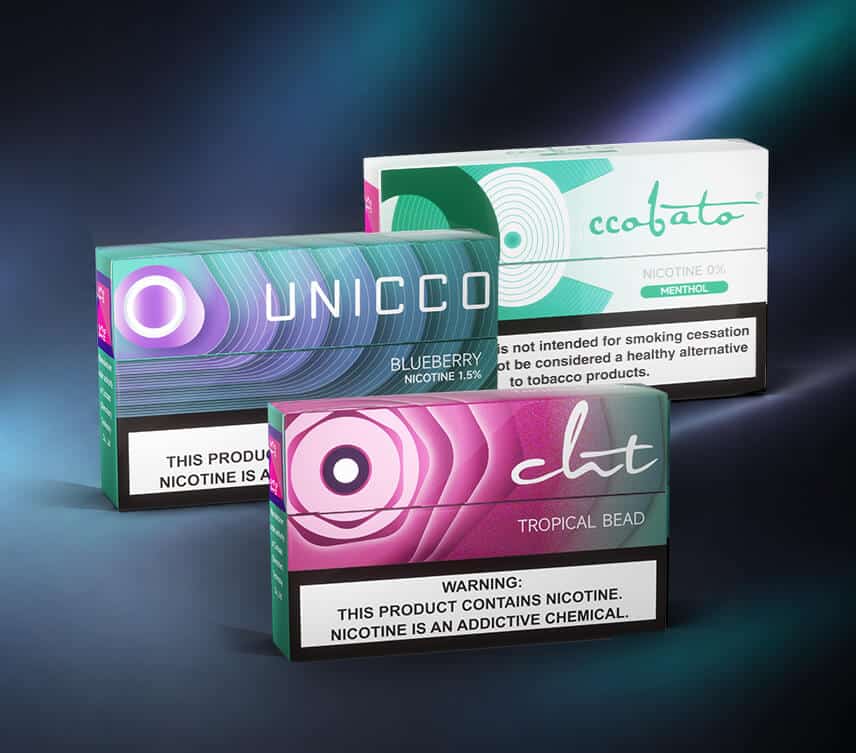
The regulator sees tobacco, not a device
A heat-not-burn stick that contains real tobacco is a tobacco product, and everything follows from that identity: the licensing, the tax rate, the warning labels, the advertising limits. The device is a separate compliance line. Treat them as one thing and you will file the wrong paperwork.
The market agrees. As of August 2023, 98 countries or jurisdictions had regulated or banned heated tobacco products[1]. Even Philip Morris needed a court to settle where its HEETS stick sat under German law: in 2021 the Administrative Court of Braunschweig ruled that a tobacco product heated without combustion is classified as a smokeless tobacco product[2].
So entering the HNB market is a regulated entry, not a product launch. The decision order is fixed: screen the market, file the notification, model the tax, clear the patents, pick your side, lock the supply, control the claims, write the exit. Every step carries a legal deadline or a checklist you can verify. Start with the first one.
Screen markets on three questions
“Legal” is a ticket, not an opportunity. India banned production, import, sale, and advertisement of HTPs in 2019 and reaffirmed that ban in February 2026 under industry lobbying pressure[3]. Legal entry does not guarantee a winnable market.
Screen with three questions. Question one: what does the policy scan say? The Global Tobacco Control policy scan identified 98 countries or jurisdictions regulating or banning heated tobacco products as of August 2023[1]. Build a red-yellow-green list per candidate market. Red is out.
Question two: who controls the channel? Seventeen countries, plus Taiwan, hold stakes in tobacco companies, and those companies produce more than half of the world’s cigarettes[4]. In Japan the government owns more than one-third of Japan Tobacco (the parent of JTI)[4]. A state-owned market and an open market are two different games with different entry routes. Add a “channel controller” column to your list.
Question three: how big is the prize, from first-party numbers? Skip the paid research reports. They disagree with each other, and their scope definitions do not match. Company disclosures are often the only publicly available, regularly updated source on global HTP uptake[5]. PMI’s filings give the shape: smoke-free products sold in 82 markets and approximately 19.7 million adults around the world had already switched to IQOS and stopped smoking as of September 30, 2023[6], with PMI holding half to three quarters of HTP device share since 2018[7]. Japan shows the ceiling: heated tobacco is about 42% of its total tobacco market[8].
Allowed to sell does not mean worth entering. The list, the channel column, and the first-party numbers decide whether a market clears the screen.
Schedule from the six-month notification deadline
Your project clock does not start when you sign a supplier. It starts when you file the product notification.
In the EU, under Article 19 of the TPD, manufacturers and importers must notify the competent authorities of each novel tobacco product at least six months before placing it on the market, by electronic submission[9]. The duty is per product and per member state[10]: twelve SKUs across five member states is sixty notification files, submitted through the common EU-CEG gateway, which is one portal, not sixty filings. Change the recipe and you file again[10]. And notification is not approval: filing the forms buys no guarantee.
Within the EU this architecture is uniform. Outside the EU, the deadline, the authority, and the data package differ market by market. Treat the six months as your planning template, and check each market’s own deadline.
That six months is your floor, not your lead time, because the notification depends on data you may not have yet. The standardized submission covers ingredients, emissions, toxicology, and product design[10]. The TPD also requires the product description and usage instructions[9], plus a risk/benefit analysis of effects on initiation, cessation, and consumer perception[9].
Here is the trap. You need samples to build the data package, and importing samples into a market you are not yet cleared to sell in is itself a regulated act. The egg needs the chicken. Temporary admission is the standard customs route for samples, but the paperwork varies by market, so confirm the sample route in writing with the competent authority of your first target market, in week one.
Then run the smallest validation possible: pilot the market on a legal minimum, and hold the full certification spend until the pilot answers. Clear any pre-notification trial form with the same authority, in writing. Work backward from the notification date: if launch is month 12, the notification lands by month 6, and the tested samples must exist well before that. That is your Gantt chart, and the six months is the only line on it the law fixes for you.
Stress-test your price against tax convergence
Excise is the single largest variable in your margin model, and it is being flattened on purpose.
Most countries tax HTPs with a specific excise on tobacco weight, at rates generally below cigarettes. A handful tax per stick. Even fewer tax HTPs at the full cigarette rate[11]. Every entrant’s model quietly assumes that gap survives. Check the calendar before you spend.
On 16 July 2025 the European Commission proposed a recast of the Tobacco Excise Directive that extends the directive to new products, including heated tobacco, with new minimum taxes[12]. The first time at EU level[12]. The same proposal covers tobacco-free herbal heated sticks too[13]. “Tobacco-free” would no longer mean tax-free by default if the proposal passes, so do not price your herbal line on that assumption.
Build the sensitivity table before you build the business plan. Floor case: today’s weight-based excise in your target market. Base case: the TED minimum tax, because convergence is the announced direction. If the two cases leave no margin, the market fails the test now, not after launch.
Tax is not only rates. It is also administration. In Montenegro, the Revenue and Customs Administration ran out of excise stamps, and tobacco and alcohol shipments sat at the border, unable to be cleared or put on the market[14]. One country, one incident. But it shows the channel cost of tobacco logic: fully legal goods can still fail to reach the shelf.
Clear patents before you place the order
HNB is a patent minefield, and the mines were laid by the two biggest players.
PMI sued BAT in Japan in 2018. In spring 2020 BAT hit back at the US ITC and in several European countries, including Germany and the UK[15]. Four years of litigation ended on 2 February 2024 with a global settlement that resolves all ongoing infringement litigation and all related injunctions and exclusion orders[6].
Read the release like a lawyer. The settlement prevents future claims against current heated tobacco and vapor products[6]. “Current” does the work: future products stay open to claims from either side, and both parties retain the right to innovate and introduce product iterations[6]. The war is paused, not settled for good.
The third-party risk sits in compatible sticks. IQOS ILUMA is designed to be used with TEREA, and using either with previous IQOS generations can damage the device[16]. Compatible sticks ride on the majors’ hardware while living inside their patent portfolios. The filings keep coming: a 2024 Imperial Tobacco application (WO2024223579A1) puts part of the electronics inside the consumable so the stick completes a circuit for stick recognition[17]. As of August 2026, the interface keeps attracting new claims.
Treat FTO like a customs document. Before any stick order, run a freedom-to-operate search for your target market and get a non-infringement opinion from the supplier. No opinion, no order. The supplier checklist turns this into paperwork.
Decide which of the two businesses you are in
You are entering two businesses, not one. Decide which before you spend.
The device is consumer electronics. It iterates fast, sells through general channels, turns inventory quickly, and its safety standard is an appliance standard: IEC 60335-2-120:2024 covers the appliance and explicitly does not cover the consumables or the substances in their emissions[18]. Run it with electronics discipline and it behaves like one.
The stick is tobacco. It needs licenses, notifications, excise stamps, and repeat purchases. Run the stick with electronics discipline and you die at the first administrative wall. Remember Montenegro: fully compliant goods sat at the border because the state ran out of excise stamps[14]. Tobacco logic has a paper trail you cannot iterate your way past.
The reverse mistake is just as expensive. Run the device like tobacco, with slow approval cycles and long purchase commitments, and you die in inventory: devices deprecate, sticks repeat.
So draw two columns on one page: compliance, cash flow, channels, inventory turnover. Fill each for the device and each for the stick. If both look like you, run them as two P&Ls with two clocks.
Vet stick suppliers on five documents
Devices are easy to buy. Sticks are hard to lock. PMI makes its tobacco sticks at what it calls specialized manufacturing centers[19]. Add the majors and a handful of dedicated producers, and you have the global supply. Treat stick sourcing as the binding constraint of your project.
Vet suppliers on five documents, in this order. The order is the risk ranking.
One, registration and manufacturing licenses for the stick line. A supplier without them is selling you future problems.
Two, the product notification file with ingredient and emission data. If they have already notified the product in an EU member state, you inherit a working data package. If not, you are funding one from zero.
Three, quality control reports against a real puffing protocol. This is cheaper than it sounds. The high degree of standardization of the two main HTP products, IQOS and glo, simplifies aerosol testing through agreed puffing protocol standards[20], including the standardized recommended puffing protocol of CORESTA[20]. TPM and TSNA measurements from a competent lab are comparable because the machines and sticks are. Ask for reports, not promises.
Four, a freedom-to-operate analysis or patent opinion for your target markets. No opinion means assume a minefield. A supplier who cannot produce one cannot produce safe goods.
Five, contract terms for regulatory change: return or replace if rules shift, and indemnity against third-party patent claims. Put these in before the first shipment, not after.
Run the five documents on every shortlisted supplier. Some manufacturers ship FTO validation and a complete supply chain as standard deliverables. More on that in a moment.
Write claims from the rulebook, not the sales deck
Your best selling point can be your clearest violation. Run every claim through the rulebook, not the sales deck.
Do not lead with reduced harm, and do not call the product safe. Such a claim needs long-term evidence no new entrant can have, so regulators read it as unsupported. Commission Delegated Directive (EU) 2022/2100, published on 3 November 2022, in force from 23 November 2022, withdraws certain exemptions in respect of heated tobacco products[21]. The default changed: an exemption your selling point leaned on is one the EU is taking back.
Make the audit a three-column table: the line, the rule behind it, the verdict; no rule, cut the line. Check flavors the same way, SKU by SKU, against the target market’s rules in force today; drop non-compliant SKUs before you buy stock. Put a swap clause in the purchase contract, so a mid-flight rule change swaps stock instead of stranding it. Read the rules at the source: the directive in the Official Journal[21] and the policy scan from your screening.
What survives is what your notification file already documents: ingredients and nicotine content, and which device the stick fits. Treat claims like spec sheets: versioned and dated, reviewed before launch; marketing drafts, compliance signs. If nobody in your company signs, nobody ships.
Track the policy calendar and pre-write your exit
Your investment follows today’s rules into a market that may not honor them tomorrow. Heated tobacco regulation is tightening worldwide, but unevenly, and on published calendars. Two cheap habits cover most of the damage: a monitoring list and a contract clause.
In February 2024, COP10 received the comprehensive HTP report written by the WHO Study Group and the HTP Expert meeting in response to a decision from COP8[22]. At COP11 in 2025, the new-tobacco-product agenda stalled under industry interference and was postponed to COP12, scheduled for 2027 in Yerevan[23].
A COP decision does not bind your target market’s domestic law. The transmission from treaty hall to national statute runs on a lag, so 2027 is not a deadline; it is a warning window. The COP12 agenda, from expanding bans on flavours and new products to liability questions[23], is the draft legislation of the next few years.
Three subscriptions cover the window. The FCTC COP session page, checked before each COP. The Global Tobacco Control policy scan from the screening step, re-run quarterly. The official gazette of each target market, where a COP signal turns into a draft law you must answer.
Grade every new policy by its verb. Restrictions come in four: production, import, sale, and advertisement[3]. An advertising ban is yellow on your screening list: it changes the launch plan. An import ban is red: it ends the entry.
India is the worked example: all four verbs banned in 2019[3], reaffirmed in February 2026 against industry lobbying on Article 5.3 grounds[3]. A red market can stay red for seven years, so the check is recurring.
Pre-write the exit before you sign the entry. Long-term distribution and purchase contracts need a clause that unwinds you on regulatory change. Define the trigger as a material regulatory change, a new verb-level restriction or a tax-rate jump, then fix the exercise order: re-export first, return second, sell-down last for stock already in the channel, each with a deadline. Use the same trigger definition as document five in the supplier checklist so both clauses pull the same direction.
Have a lawyer draft the wording per jurisdiction.
The exit clause costs a lawyer’s hour. The monitoring costs ten minutes a month. Both are cheaper than a stranded warehouse.
A supplier option that passes the checklist
Here is how the five-document checklist plays out against a real supplier. Ccobato, the brand of CCOBATO (SHENZHEN) TECHNOLOGY CO ., LTD., presents itself at ccobato.com as a global HNB stick manufacturer and integrated solution provider.
On the checklist’s hardest items, the company states it holds 30+ inventions and PCT patents, has completed FTO verification, and runs a complete supply chain, as an OEM partner to what it describes as the top 6 global tobacco groups. Per its website, its own brands reach retail in 42 countries through distributors, and it reports annual sales of 400 million sticks. Ask for the distributor list by country and any audited sales figures behind them.
Its unique selling point is its patent-safe electromagnetic induction HNB stick compatible solution, with a stable recognition rate of 90%–100%. The two halves are one engineering problem: the stick has to stay clear of mainstream electromagnetic heating devices’ locked-interface patents and still get recognized. Mainstream device heats by electromagnetic induction, so an unrecognized stick never heats. One that fails on a consumer’s first try comes back through the channel as a return. Recognition rate, on a retail shelf, is return rate.
What earns it a shortlist slot is that Ccobato claims FTO validation and a complete supply chain, exactly the two items most stick suppliers cannot produce. A supplier’s FTO claim is the fourth checklist document put into practice: it earns a review, and your own diligence confirms it. Then verify against the documents, not the brochure: request the FTO verification file, the OEM client list, and a quote through the inquiry form. Whether it passes is your diligence call.
Frequently asked questions
Is heated tobacco legal in my country?
It depends on the country, and the map changes. As of August 2023, 98 countries or jurisdictions regulated or banned heated tobacco products[1]. Start with the policy scan, not a sales report.
Do I need to notify my products in the EU?
Yes, per product. Manufacturers and importers must notify the competent authority at least six months before placing a product on the market[10]. Notification is not approval, so treat the six months as a hard floor.
Are herbal heated sticks tax-free?
Do not assume so. The European Commission’s TED recast proposal covers tobacco-free herbal heated sticks[13], which would close the “no tobacco, no tax” shortcut.
What should I check before ordering TEREA-compatible sticks?
Patent exposure first. IQOS ILUMA is designed for TEREA and is not interchangeable with earlier generations[16], so compatible sticks live inside someone else’s closed system. Demand a freedom-to-operate opinion before any order.
How do I budget for excise tax changes when importing heated tobacco into Europe?
Model two cases: today’s weight-based excise as the floor, the TED minimum tax as the base case. Price from the base case. If only the floor works, the market fails the test.
References
[1] Countries/Jurisdictions (Heated Tobacco Policy Scan). https://www.globaltobaccocontrol.org/en/policy-scan/heated-tobacco/countries
[2] Germany – Philip Morris GmbH v. Federal Republic of Germany. https://www.tobaccocontrollaws.org/litigation/decisions/philip-morris-gmbh-v-federal-republic-of-germany
[3] India Maintains Ban on E-Cigarettes and Heated Tobacco Amid Industry Lobbying Pressure. https://extranet.who.int/fctcapps/fctcapps/fctc/kh/TIInterference/news/india-maintains-ban-e-cigarettes-and-heated-tobacco-amid
[4] When governments own tobacco companies, who watches out for your health?. https://www.theexamination.org/articles/when-governments-own-tobacco-companies-who-watches-out-for-your-health
[5] Global Heated Tobacco Product User Estimates, 2014-2024: Descriptive Surveillance Study Using Manufacturer Disclosures. https://pmc.ncbi.nlm.nih.gov/articles/PMC13094793/
[6] PMI and BAT Announce Global Patent Settlement. https://www.pmi.com/media-center/press-releases/press-details?newsId=27101
[7] Heated Tobacco Products (TobaccoTactics). https://www.tobaccotactics.org/article/heated-tobacco-products/
[8] Japan, the World’s Most Dynamic HTP Market. https://www.tobaccoasia.com/features/japan-the-world%E2%80%99s-most-dynamic-htp-market/
[9] Advancing regulatory frameworks for smoke-free products. https://www.pmiscience.com/en/smoke-free/tobacco-regulation/
[10] tobacco products – notification and information requirements. https://ekotox.eu/tobacco-products-notification-and-information-requirements/
[11] Taxation of novel and emerging nicotine and tobacco products (HTPs). https://pmc.ncbi.nlm.nih.gov/articles/PMC9559335/
[12] Revision of the Tobacco Taxation Directive (proposal). https://taxation-customs.ec.europa.eu/taxation/excise-duties/excise-duties-tobacco/revision-tobacco-taxation-directive-proposal_en
[13] EU tax directive recast to include e-cigs, support EU budget and reduce tobacco use. https://ecigintelligence.com/eu-tax-directive-recast-to-include-e-cigs-support-eu-budget-and-reduce-tobacco-use/
[14] There are no excise stamps, the goods are waiting at the border. https://en.vijesti.me/news-b/economy-d/662322/there-are-no-excise-stamps-on-goods-at-the-check-border
[15] Philip Morris and BAT end global patent clash over heat-not-burn cigarettes. https://www.juve-patent.com/cases/philip-morris-and-bat-end-global-patent-clash-over-heat-not-burn-cigarettes/
[16] TEREA Tobacco Sticks FAQs. https://www.iqos.com/ph/en/support/faqs/terea-tobacco-sticks.html
[17] WO2024223579A1 – Heated tobacco system, device and consumable (Imperial Tobacco Ltd, 2024). https://patents.google.com/patent/WO2024223579A1/en
[18] IEC 60335-2-120:2024 Household and similar electrical appliances – Safety – Part 2-120: Particular requirements for the safety of appliances for the generation of directly inhalable aerosols. https://webstore.iec.ch/en/publication/66310
[19] Manufacturing the tobacco sticks in our Tobacco Heating System and Oven Heating System. https://www.pmiscience.com/en/news-events/scientific-update-magazine/manufacturing-the-tobacco-sticks-/
[20] Aerosol Emissions from Heated Tobacco Products: A Review Focusing on Carbonyls, Analytical Methods and Experimental Quality. https://pmc.ncbi.nlm.nih.gov/articles/PMC10747376/
[21] Commission Delegated Directive (EU) 2022/2100 on the withdrawal of certain exemptions in respect of heated tobacco products. https://health.ec.europa.eu/publications/commission-delegated-directive-eu-20222100-withdrawal-certain-exemptions-respect-heated-tobacco_en
[22] Comprehensive report on research and evidence on novel and emerging tobacco products, in particular heated tobacco products. https://fctc.who.int/resources/publications/m/item/comprehensive-report-on-research-and-evidence-on-novel-and-emerging-tobaccoproducts-in-particular-heated-tobacco-products
[23] ‘Unprecedented Levels Of Industry Interference’ Stalls Regulations On New Tobacco Products And Pollution At UN FCTC COP11. https://healthpolicy-watch.news/unprecedented-levels-of-industry-interference-stalls-regulations-on-new-tobacco-products-and-pollution-at-unfctc-cop11/