
Sort the three products hiding behind “TEREA alternative”
You found a supplier. The quote is great. One question: which of the three products are you actually buying?
“TEREA alternative manufacturer” is one phrase, three products. Official TEREA, made by PMI, sold through its own distribution. IQOS ILUMA compatible sticks: built by third parties for ILUMA devices, sold under a factory’s brand or your white label, never carrying the TEREA name or packaging. Counterfeit TEREA, copies of the trademark and dress. KT&G lil, BAT glo, and JTI Ploom split the same way.
The three carry different contract clauses, different customs documents, and different legal risks. Patent-safe design is one thing; passing off is another, which the law does not spare when a product or its marketing imitates the original [1]. Test it on a packaging render: a TEREA-style color scheme plus a near-copy typeface already reads as dressing like TEREA, whatever the pack says. IQOS states that it only recognizes sticks with SMARTCORE technology; non-compatible units do not activate [2]. PMI runs machine learning to identify and prevent illegal online sales [3], the same red line from the brand’s side.
Customs sorts the three fastest. Compatible sticks clear on documents you can demand before ordering: a tobacco import license, certificates of origin, the target-market product notification; the per-country checklist sits in the compliance section ahead. Counterfeit TEREA has no lawful document path. In April 2025, US CBP seized 17,500 cartons of cigarettes bearing counterfeit marks at the Laredo Port of Entry: a Vietnam shipment worth $729,400 if genuine. The seizure rested on marks registered with the USPTO and recorded with CBP through its e-Recordation program; that authority covers any imported merchandise bearing a recorded infringing mark.
So “Is a TEREA alternative legal?” has three answers. “What is the difference between compatible and counterfeit TEREA sticks under customs law?” is the question to ask before any deposit. One category is lawful but conditional; the conditions land in the spec, compliance, and RFQ sections ahead: susceptor data, market files, contract gates. The other is unlawful outright.
The guide then runs the technical basis, the patent map, the compliance checklist, and the supplier checks. Know which product you are buying before you compare factories.
Why the stick heats itself: the induction logic every buyer should check
The device does not heat the stick. The stick heats itself. If that sentence surprises you, your supplier is still using blade-era vocabulary, and this section is the test to run on them.
How does IQOS ILUMA work, in one sentence? The device provides the field, and the stick converts it into heat. PMI’s science pages put it plainly: embedded inside the tobacco stick is a metallic strip, a susceptor, which removes the need for direct contact between the device electronics and the heating element; the induction-based device is THS 3.0, sold as IQOS Iluma [4]. The coil in the device generates an alternating magnetic field; eddy currents inside the strip do the heating. That is the causal chain PMI markets as SMARTCORE, and it is the one your supplier must understand, rather than merely describe.
The previous generation is a different technology. IQOS 3 MULTI and IQOS 3 DUO use a resistive heating blade, while IQOS ILUMA operates by induction with a coil in the device and a metal insert in the TEREA stick [5]. The two generations do not share consumables. A factory whose experience is all blade-era has proven nothing about induction sticks, and the blade skill set does not transfer. The induction route is now locked in by granted patents on articles with an internal susceptor running longitudinally through the rod, built for a device with an inductor [6], and even upstream filter makers design around a reconstituted tobacco plug with a metal induction element [7].
Compatibility, then, is a thermal-response match, not a dimensional one. On a factory visit, skip the machine list and ask one question first: has this line ever produced induction sticks? Our own induction stack starts from a granted patent on a single-layer, single-alloy susceptor whose permeability rises, peaks, and drops toward its Curie point, so one strip both heats and self-limits.
The susceptor spec sheet: turn marketing words into RFQ parameters
“Imported induction strip.” “Military-grade heating element.” Take three brochure phrases like these, translate them into the table below, and one inquiry email will filter out half the factories you are talking to.
| Parameter | Public benchmark | Ask the factory for |
|---|---|---|
| Susceptor geometry | About 4 mm wide, under 0.6 mm thick, about 12 mm long | Material and dimensional tolerance report |
| Susceptor structure | Nickel-iron alloy between two stainless steel layers; alloy Curie point about 380°C | Alloy grade and Curie point certificate |
| Heating coverage | Full length of the tobacco plug | Whole-stick temperature mapping per batch |
The benchmark comes from patent litigation filings: a susceptor approximately 4 mm wide, less than 0.6 mm thick, and about 12 mm long, running longitudinally from one end of the tobacco plug to the other without touching the plug wrapper [8]. The same filings describe the strip as three layers, a nickel-iron alloy sandwiched between two stainless steel layers, the alloy’s Curie point at about 380°C and the steel layers above 600°C [8]. PMI holds granted patents on the internal-susceptor route [6], and one inductively heatable tobacco product patent is still active in the United States, expiring 2035-05-25 [9]. The tolerance question is not academic: insufficient heating of the tobacco from the susceptor’s limited heating zone is a recognized pain point in susceptor-embedded sticks [10].
So the RFQ does not ask “do you use induction?” It asks for a material and dimensional tolerance report and a full-stick temperature map, per batch. Emission-reduction claims get their own gate: require the testing protocol and the funding statement before you trust the number [11]. No reduction percentage means anything without both.
What does a serious acceptance dataset look like? Ours comes from our granted patent documents: preheat to puffing temperature in 10–12 seconds, 12–14 puffs per stick, susceptor peak temperature about 325.1–339.8°C, mouth-end aerosol about 39–42°C. In recognition testing with 200 sticks per group, our magnetic-particle blocker design passes device recognition at 92.5%–100%, against 87.5% for the control. Numbers in that shape belong in a sample report. Adjectives do not.
Who funded the report? Three questions before you trust any emission data
Thirty-one studies on heat-not-burn, twenty of them affiliated with the tobacco industry [12]. The report in front of you most likely sits inside that twenty. Read the funding line before you read the number.
The split is not cosmetic. On the same product under the same regimen, an independent study reported less tar and more tobacco-specific nitrosamines than manufacturer-funded studies did [12]. The protocol moves the numbers too: machine measurements differ between the ISO regimen at 35 mL puff volume and the Health Canada Intense regimen at 55 mL, and no regimen replicates human puffing [12]. Add the third layer. A 2025 study bridging emission datasets across stick variants was sponsored by JTI SA and Japan Tobacco Inc., and all of its authors are JTI employees [11]. The comparability problem is not theoretical; it ships inside the report itself.
Three questions before you accept any emission data. Who funded it? Under what protocol was it generated? Has an unaffiliated lab reproduced it? “The factory has a report” is the default assumption in most B2B guides, and it is the wrong one. A report proves a test happened, not that the test answers your question.
Buyer action: before a first order, send the same samples to two unaffiliated third-party labs in parallel and compare the two files. Certifications follow the same logic. A supplier should be able to name its certification categories on the spot: MSDS, TPD, JFRL, ISO 9001, GMP. That category list is the kind of paperwork we keep for our own sticks. Ask for categories first; certificate numbers come later, in due diligence.
The patent map is your first market filter
“Can you actually sell it there?” Ask that before you ask which factory is cheapest. A container held at customs costs more than any per-stick price advantage. The patent map decides which markets are open to a compatible stick at all.
Start with what has expired. The foundational US induction-heating patent for smoking articles, US5613505A, shows as expired [13]. Not everything has: an inductively heatable tobacco product patent from PMI is active in the United States as of 2026-08-19, expiring 2035-05-25 [9], and PMI holds granted patents on internal-susceptor articles [6]. Litigation reshapes markets as fast as filings do. After patent disputes raised by R.J. Reynolds, Altria could not sell IQOS in the US after 29 November 2021 [14]. In 2024, PMI and BAT announced a global patent settlement that resolves all ongoing global patent infringement litigation between them, covering current heated tobacco and vapor products [15]. Disputes between majors can pause an entire market; a settlement can reopen one.
Courts also draw the boundary of lawful compatibility. In PMI v Nicoventures, a UK court held in 2023 that IQOS ILUMA, whose heater sits inside the consumable, did not infringe BAT’s patent [8]. Design differences can clear patent claims. But the law that tolerates design-arounds does not spare passing off [1]; a stick that is patent-clean but dresses like TEREA still carries trademark risk. Patent density outside PMI matters too. KT&G keeps adding registered IP rights and next-generation product patent applications year after year [16]. The litigation source is not one company.
Sort backwards from this map. Filter suppliers by FTO risk in your target market first; compare process and price second. Send every shortlisted factory three questions before any price talk: an FTO opinion covering our markets? Seizure records? Pending litigation? Our own website reads the gate the same way: the four majors hold 3,000+ HNB patents between them. We market our sticks as patent-safe, backed by our own FTO analysis, a company position rather than an industry fact.
Device OEMs are not stick OEMs: how to verify who you are really talking to
The factory that makes IQOS devices cannot necessarily make tobacco sticks. The difference is one document: a tobacco manufacturing license.
China is the reported home of IQOS device assembly. Various sources report that Intretech produces IQOS gadgets for PMI [17]. The compatible-stick OEM layer also exists in Shenzhen, where suppliers describe themselves as OEM/ODM factories with complete HNB production lines covering devices and compatible pods from design to final assembly [18]. Note the qualifier on that second claim: it is the supplier’s own account on its own website. A device line and a stick line sit in two different regulatory worlds, and a tour of a device line proves nothing about the right to manufacture tobacco sticks.
Treat “manufacturer” as a claim to verify, not a label to trust. Screen first on where the stick line operates and on the tobacco production license for that country. In the first inquiry, ask for the license file, not the brochure.
Then run four checks. The company’s business scope and production qualifications, on paper. Live video of the actual stick line, or an on-site walk, in real time. A small trial order before any volume commitment. And the question that separates factories from trading companies fast: can the supplier produce its own formulation documents, or only quotes? Skip the talk about what share of “manufacturers” are really traders. No public data supports a number, and the four checks settle it case by case. Our own footprint spans Shenzhen, Dongguan, Kunming, Laos, and Indonesia, which is how we learned that the license question is the one that matters.
Market size, with the caveats that matter for sourcing
Heated tobacco passed liquid e-cigarettes in 2022: $32.38 billion against $18.85 billion [19]. Size is not the number that matters here. The spread between estimates is.
Global HTP user estimates for 2024 range from 45.6 to 78.7 million [20]. That gap is not sloppy math. Different estimation methods, built largely on manufacturer disclosures, disagree by tens of millions of users. When a factory pitch quotes one user figure, ask which method produced it.
Korea is the empirical benchmark. KT&G lil took 47.4% of South Korea’s heated tobacco stick market in Q1 2026 [16]. Heated tobacco keeps gaining share of all tobacco sales in the country [16]. A domestic brand leads a market that PMI entered first, and that is why Korea appears in every sourcing deck you will see.
For sourcing, aggregate market size is close to useless. What matters is your addressable slice: installed IQOS ILUMA devices times stick consumption per user, in the countries you can legally enter. PMI does not publish the official install and shipment figures needed for that calculation, so do not accept a factory’s invented version of them either. Take the 45.6–78.7 million range [20] as the ceiling your planning respects, and build your own model from the markets that pass the checklist in the next section.
Pick the market before the product: the compliance checklist
The same container can be legal in the UK and illegal in the EU. Choosing a flavor is choosing a market. Filter by market first; compare product parameters after.
Start with the veto list. As of 2020 data, 11 countries banned HTP sales, including Brazil, India, Mexico, Norway, and Singapore [21]. A ban is a one-line elimination, before you look at any factory. Then check whether ILUMA itself is sold in the market. It launched in Japan Duty Free in 2021, with Switzerland and Dubai duty free following in 2022 [14]. If the device is not officially sold, your compatible stick has no installed base to serve.
Compliance is a per-country paper exercise. The EU TPD has no single EU-wide approval: manufacturers and importers notify Member State authorities through the EU Common Entry Gate, and Member States implement the directive differently [22]. The UK classifies heated tobacco as a novel tobacco product under current tobacco law: advertising banned, sales restricted to over-18s, no graphic warnings required, and flavors such as menthol still permitted [23]. Taiwan runs a designated heated tobacco product health risk assessment review, with industry applications and review status published by the health authority as of 10 August 2026 [24]. The GCC has its own standard in force for tobacco heating systems, covering definitions and standard conditions for aerosol generation and collection [25].
Flavor is where markets diverge hardest. The EU extended its characterising-flavour ban, which already applied to cigarettes and roll-your-own tobacco, to heated tobacco products from 23 October 2023, covering flavorings in filters, papers, packages, and capsules [26][22]. The UK, outside the EU, still permits menthol [23]. One flavor library, mapped per market. There is no single global SKU set.
Compliance now extends past the product itself. Under England’s Tobacco and Vapes Act 2026, using a heated tobacco device in a heated tobacco-free place is an offence [27]. That is a use ban, not a sales ban, and it changes where a brand sites retail and what in-store materials may show. So: is heated tobacco legal in the UK? Yes, under the conditions above. What documents do you need to import heated tobacco sticks into Germany in 2026? A TPD notification in Germany, not an “EU certification.” Our turnkey scope includes TPD and JFRL compliance assistance as part of the package, which is the shape of support a manufacturer should offer.
The RFQ that separates serious suppliers from brochures
Ask about specs before you ask about price. A low quote with no susceptor report is worth nothing.
Structure the RFQ in three tiers. Deal-breakers first: a susceptor material and dimensional tolerance report, checked against the public benchmark of about 4 × 0.6 × 12 mm [8]; the compliance file for your target market; and an FTO opinion covering those markets. A supplier that cannot produce all three stops there. Second tier, commercial terms: lead time and customization capability. Third tier, bonuses: anything that lowers your post-order workload.
Golden samples belong in the contract. Approve the final sample, sign it, date it, and seal it, and keep several copies: one for the factory, one for your inspectors, one for you [28]. Mass production gets compared against that sealed sample, and HKTDC’s inspection guidance pairs the approval sample with AQL sampling at the factory [28]. Write per-batch inspection with an agreed AQL level, formulation lock, and sealed reference samples into the contract as your requirements. These are buyer-side clauses you impose; no supplier gets to relabel them as “industry standard.”
Commercial terms come after the gate, not before. A full OEM/ODM scope, as a benchmark, runs needs evaluation, flavor development, samples, certification support, mass production, delivery. Our own cycle takes about 1–2 months from sample to small batch and 4–6 months to mass production. Compare every quote against a pace like that, and against the deal-breakers above.
Activation test first: the sample checklist that belongs in your contract
The first sample goes into the device. Nothing lights up. That failure is the activation test, and it is the cheapest acceptance check in the whole contract. Run it before anything else.
IQOS states the rule plainly: the device only recognizes units with SMARTCORE technology and will not activate otherwise [2]. Activation is the binary gate that sorts a compatible stick from a non-compatible one, before any sensory judgment.
Once activation passes, test on a real device: heating uniformity, draw resistance, and taste across a full session. Then consistency: sample across batches, not one cherry-picked stick. Leave out speculation about protective shutdowns and scorching causes. Official documentation does not spell out those mechanisms, so do not pay a supplier who claims to.
Storage is a separate acceptance item, and it matters most for hot, humid markets. When relative humidity is excessive, tobacco absorbs water vapor and becomes a nutrient medium for molds; mold and mustiness reduce quality [29]. Put the storage and anti-mold requirements into the contract’s acceptance terms, not the marketing appendix. A supplier that cannot state its moisture controls for transport and warehousing fails this line.
What should the pass data look like? Our granted patent documents report preheat of 10–12 seconds, 12–14 puffs, and the temperature windows listed in the susceptor section. A sample report carrying that shape of data, per batch, is a serious supplier. A one-page “quality guaranteed” letter is not.
Deal-breaker checklist: the pitfalls that end sourcing relationships
Every pitfall below has a documented ending. Learn from those, or pay for your own.
Pitfall one: trusting the factory’s emission report. Independent and manufacturer-funded studies of the same product diverged on tar and nitrosamines [12]. Two unaffiliated labs, or no signature. Pitfall two: ordering counterfeit TEREA while believing it is compatible. PMI runs machine learning to detect and prevent illegal online sales [3]. The brand actively hunts this product class. Pitfall three: ignoring the tax structure of the target market. Twenty-nine countries or jurisdictions tax HTPs [30], and the ban list from the compliance section eliminates eleven more. Retail price models that skip either line fail. Pitfall four: ignoring the patent map. The halt of US IQOS sales after RJR patent disputes [14] and the 2024 PMI-BAT global settlement [15] both moved whole markets. Pitfall five: assuming authorization means marketing freedom. Demand the authorization document itself, plus the current marketing restrictions, and attach your approved marketing-claims list to the contract. That is a document checklist, not a legal opinion; get one of those too, for your markets.
Now the negative filter, which is how sourcing should actually run. No FTO opinion: out of the comparison. No third-party parallel testing: no first order. License file not produced: eliminated on the spot.
A supplier that can pass every check in this guide
Run this guide’s checklist against any supplier. Including us.
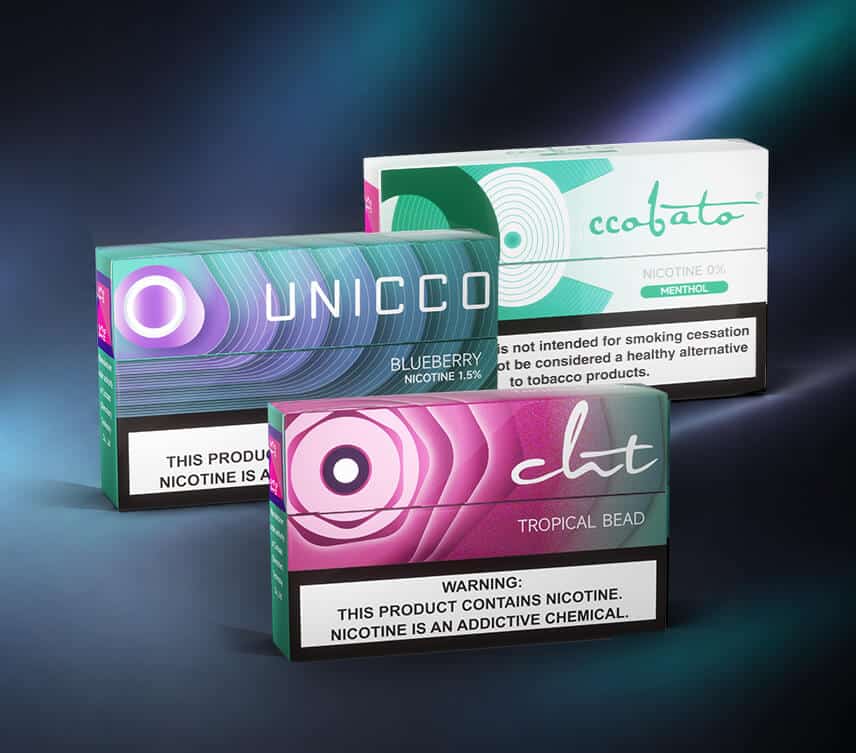
We are Ccobato, the brand of CCOBATO (SHENZHEN) TECHNOLOGY CO ., LTD. We supply susceptor-based electromagnetic heating materials and electromagnetic-induction-stick-compatible stick structures, built on our granted single-layer, single-alloy susceptor patent, with a 90%–100% recognition rate in our own testing, annual capacity above 400 million sticks, customers across 42 countries, and an OEM role we claim with top-six global tobacco groups. We market our sticks as patent-safe, backed by our FTO analysis. Certifications, by category: MSDS, TPD, JFRL, ISO 9001, GMP. Every one of those is a company figure; verify each the way this guide taught you.
The checklist is the offer. Send us an RFQ with the susceptor report, FTO questions, license file, and golden-sample terms written in. Free samples are for businesses only; we do not sell to individual consumers.
References
[1] Law doesn’t punish lawful design-arounds but doesn’t spare passing off, says SG lawyer. https://asiaiplaw.com/index.php/sector/trademarks/law-doesnt-punish-lawful-design-arounds-but-doesnt-spare-passing-off-says-sg-lawyer
[2] Frequently asked questions IQOS | IQOS Aruba. https://www.iqos.com/aw/en/get-support/faqs/iqos-iluma-i.html
[3] Fighting illicit trade: Essential for delivering a smoke-free future. https://www.pmi.com/our-business/illicit-trade-prevention
[4] Heated tobacco products (PMI Science). https://www.pmiscience.com/en/products/heated-tobacco/
[5] A novel approach to the quantitative analysis of the particulate matter in conventional cigarette smoke and heated tobacco product aerosols. https://pmc.ncbi.nlm.nih.gov/articles/PMC11336348/
[6] US20170086508A1 – Aerosol-generating article with internal susceptor. https://patents.google.com/patent/US20170086508A1/en
[7] EP4615260A1 – A sustainable filter or filter element. https://patents.google.com/patent/EP4615260A1/en
[8] Patents – Philip Morris Products v Nicoventures. http://nipclaw.blogspot.com/2024/04/patents-philip-morris-products-v.html
[9] US10327473B2 – Inductively heatable tobacco product. https://patents.google.com/patent/US10327473B2/en
[10] 2FIRSTS | Insufficient Heating: Pain Point of Susceptor-Embedded HNB Smoking Article and Solutions thereof. https://www.2firsts.com/news/insufficient-heating-pain-point-of-susceptor-embedded-hnb-smoking-article-and-solutions-thereof
[11] Assessing the comparability of toxic emissions reduction from heated tobacco aerosols relative to cigarette smoke: a scientific approach to bridging datasets. https://pmc.ncbi.nlm.nih.gov/articles/PMC12948778/
[12] Heat-not-burn tobacco products: a systematic literature review. https://pmc.ncbi.nlm.nih.gov/articles/PMC6824610/
[13] US5613505A – Inductive heating systems for smoking articles. https://patents.google.com/patent/US5613505A/en
[14] Heated Tobacco Products: Philip Morris International. https://www.tobaccotactics.org/article/heated-tobacco-products-philip-morris-international/
[15] PMI and BAT Announce Global Patent Settlement. https://www.pmi.com/media-center/press-releases/press-details?newsId=27101
[16] KT&G Still Leads Korea’s Heated Tobacco Market. https://nicotineinsider.com/2026/07/23/ktg-still-leads-koreas-heated-tobacco-market/
[17] IQOS OEM Intretech: E-Cig Core Components Mass Produced. https://www.2firsts.com/news/iqos-oem-manufacturer-intretech-e-cigarette-core-components-have-been-mass-produced
[18] Best Dual-Heating HNB Device For TEREA / SENTIA Magnetic Tobacco Sticks. https://www.upperbond.com/dual-heating-hnb-device-for-terea-sentia-magnetic-tobacco-sticks_p216.html
[19] Heated Tobacco Products: Emerging Health Outcomes and Insights into Oxidative Stress and Pro-Inflammatory-Driving Mechanisms. https://pmc.ncbi.nlm.nih.gov/articles/PMC12838347/
[20] Global Heated Tobacco Product User Estimates, 2014-2024: Descriptive Surveillance Study Using Manufacturer Disclosures. https://pmc.ncbi.nlm.nih.gov/articles/PMC13094793/
[21] Taxation of novel and emerging nicotine and tobacco products (HTPs, ENDS, and ENNDS) globally and in Latin America. https://pmc.ncbi.nlm.nih.gov/articles/PMC9559335/
[22] The EU’s Tobacco Products Directive: Revisiting the Requirements and Updates on Heated Tobacco Products. https://www.khlaw.com/insights/eus-tobacco-products-directive-revisiting-requirements-and-updates-heated-tobacco-products
[23] Heated tobacco. https://ash.org.uk/key-topics/heated-tobacco
[24] Designated Tobacco Product Health Risk Assessment Review Area (Review Circumstances). https://www.hpa.gov.tw/Pages/List.aspx?nodeid=4783
[25] GSO ISO 5501-2:2025 – Standards Store. https://dgsm.gso.org.sa/store/standards/GSO:976710?lang=en
[26] Directive (EU) 2022/2100 | EUR-Lex. https://eur-lex.europa.eu/legal-content/EN/TXT/HTML/?uri=CELEX:32022L2100
[27] Tobacco and Vapes Act 2026, Section 146 – Heated tobacco-free places in England. https://www.legislation.gov.uk/ukpga/2026/18/section/146
[28] What is a Golden Sample in Manufacturing, and Why are They Essential? – HKTDC Newsbites. https://sourcing.hktdc.com/newsbites/tips/golden-sample/
[29] Tobacco – Transport Informations Service (TIS/GDV). https://web.archive.org/web/20210302225401/https://www.tis-gdv.de/tis_e/ware/genuss/tabak/tabak.htm/
[30] Tax | Global Tobacco Control – Policy Scan: Heated Tobacco. https://www.globaltobaccocontrol.org/en/policy-scan/heated-tobacco/tax