
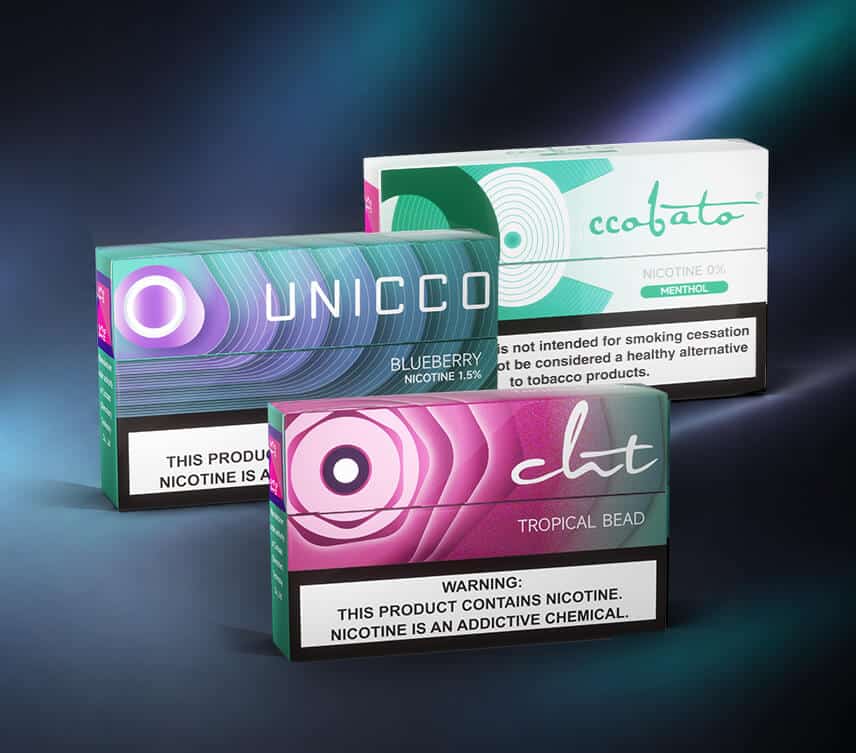
Low MOQ and low price: why that combination gets checked first
Most buyers read “low MOQ, low price” as a bargain. Read it as the first risk signal instead, because the economics of this category point one way: in practice, the main stock that can beat legitimate cost floors is illicit stock. If you check the low-MOQ, low-price combination against the known risk list before you talk price, most bad deals die at the quote stage.
The numbers behind that rule are consistent. PMI estimates that as much as 15 percent of total cigarette sales outside China and the U.S. are sourced from the black market, and that one in every ten cigarettes smoked worldwide is illicit [1]. The EU built its tobacco traceability and security feature system with a stated goal of reducing artificially cheap supplies of illegal tobacco products [2]. PMI’s own guide on spotting illicit TEREA sticks puts the buying rule plainly: if the price seems too good to be true, it probably is [3]. Enforcement pressure backs it up: in the revenue category of the World Customs Organization’s 2025 Illicit Trade Report, tobacco accounted for 92.2% of cases [4].
Keep three corners in view on every quote: minimum order quantity, unit price, and verifiable provenance. A quote that clears the MOQ bar, beats the price floor, and fails provenance is not a bargain. It is the risk priced in advance. This guide walks the three corners in decision order: entry and the regulatory baseline first, then stick format and SKU selection, then supplier tiers and verification, then price normalization and landed cost, then safe ordering from sample to payment, closing with a one-page RFQ checklist you can send unchanged.
We sell white label and private label on small minimum orders, so we sit inside the low-MOQ segment this article is about. That is exactly why we put our terms in writing instead of leaving them to a sales call. A supplier that will not put its MOQ and document list in writing before you pay is telling you something, and the rest of this guide is how to read it.
Is the category worth entering? Growth and the regulatory baseline
You hold a supplier quote, workable MOQ, workable price. Before you answer it, answer the question no supplier will answer for you: should you stock this category at all? Two checkable signals settle it: growth direction, then the regulatory baseline.
The market signal points up: one market database forecasts heated tobacco products at USD 51.29 billion in 2025, reaching USD 118.39 billion by 2031, a 15.13% CAGR over 2026 to 2031 [5]. Forecasts decide direction, not your shelf. Your shelf moves on your target market’s legal volume trend and its policy window; where regional data runs thin, weight the window.
Japan is the cleanest test: the government is raising HTP taxes toward cigarette parity in two stages across 2026 [6], and Philip Morris Japan and Japan Tobacco responded by raising prices ¥20 to ¥50 per pack on April 1 [6]. Neither move fits a dying category. PMI’s own results say demand held: heated tobacco unit in-market sales, excluding distributor and wholesaler inventory movements, grew an estimated 10.5% for full-year 2025 and accelerated to 12% in the fourth quarter [7].
That same IQOS system, through HEETS and TEREA sticks, held 76% of global heated tobacco unit volume in 2025 [5]. You buy into a format, not a category line.
The regulatory baseline is the half to watch. At COP10, held in Panama City from 5 to 10 February 2024 (after being postponed from November 2023) [8], parties adopted no standalone decision on heated tobacco products. They created a working group to keep reviewing the advice toward COP11 [9]; countries meanwhile act under existing FCTC guidance [9]. Plan for tightening. Write renegotiation or termination clauses tied to regulatory change into long-term agreements, and keep SKUs away from formats major jurisdictions already restrict. Track the working group’s output on fctc.who.int.
Enter if your target market’s legal volume trends up and your contract can absorb a regulatory change without stranding inventory. Two yeses, you move to device and format selection; one no, fix the clause before you sign.
Lock the device mix before you pick a stick format
The cheapest stick in the catalog becomes the most expensive one in your warehouse when it fits the wrong device.
This section covers IQOS-family pairing rules, the only official rules we can cite; the same two questions below apply to glo, lil, and ploom markets, where only the names change.
The official rules are fixed, and they are the first filter. HEETS or HEATSTICKS units can only be used with the original IQOS blade heated tobacco holders and cannot be used with IQOS ILUMA [10]. TEREA can only be used with IQOS ILUMA devices; the maker warns against trying these sticks in older IQOS generations [11]. HEETS are designed for IQOS ORIGINALS and earlier iterations of the device [12].
Reverse the sequence: lock the device mix of your target market, lock the stick model that fits it, then screen suppliers.
Two questions belong in every first inquiry. Which device generation dominates your target market today, ILUMA or the older blade holders? And will the device maker launch a new generation inside your inventory turnover window? A supplier that cannot answer the first is selling catalog lines, not market access.
For the answers, cross-check two sources: the device maker’s quarterly results and investor filings, which disclose shipped volumes and next-generation plans, and the share numbers a candidate supplier pitches. When the two disagree, trust the filings.
Compatibility is where we operate. Our line: electromagnetic induction devices-compatible cast-leaf stick semi-finished products at a monthly capacity of 500,000 to 600,000 cartons. Scale the number: an HNB carton holds 10 packs of 20 sticks, 200 in all [11]; Japan saw HTP stick sales reach 62 billion units in 2023 [13], about 5.2 billion a month. So 600,000 cartons a month is about 120 million sticks, roughly two percent of Japan’s monthly consumption, which tells you which tier of buyer the line serves.
Ask any supplier to name the market its volume serves and to let a factory audit or pre-shipment inspection confirm the line. What matters more is the pairing discipline: we build for one device generation and say which one before you order.
Pairing locked, the next question is which of three lines to buy: tobacco, herbal, or zero nicotine.
Tobacco, herbal, or zero nicotine: the three-way format decision
“Zero nicotine, zero regulation” is the oldest pitch in the herbal segment. Tobacco law does not chase one substance. It throws coverage hooks, and each jurisdiction picks its own from a menu of three. The nicotine hook catches anything containing nicotine from any source. The substrate hook catches anything made or derived from tobacco. The category hook names product types outright, nicotine or not. Zero nicotine clears only the first hook. Only the statute’s text says which of the other two your market throws.
The Philippines shows the category hook at work. RA 11900, the 2022 Vape Law, covers e-cigarettes, heated tobacco products and nicotine pouches, both with and without nicotine [14]. “Regulated” understates the frame: the law moved jurisdiction from the health authority to the Department of Trade and Industry, cut the minimum purchase age from 21 to 18, and permitted online sale [14]. It also prohibits “unduly appealing” flavor descriptors proven to appeal to minors, particularly those referencing a fruit, candy brand, dessert or cartoon character [14]. Read that line twice before ordering a fruit-flavored zero-nicotine SKU.
Falling inside a regulatory frame is not a market ban. It is a different rulebook, and the rulebook reaches your flavor names.
The United States throws the first two hooks together. FDA regulates tobacco products containing nicotine from any source, including non-tobacco nicotine (NTN), such as synthetic nicotine [15]. That kills the swap trick: a nicotine stick on a tea base stays inside. The substrate hook runs alongside, so a tobacco-leaf stick with the nicotine stripped out remains a tobacco product. Only a purely herbal, zero-nicotine stick clears both hooks in the US, and clearance buys no enforcement grace: FDA has not adopted a broad policy of enforcement discretion regarding tobacco products without marketing authorization [15].
Before comparing quotes, run two questions against every target market. Does the stick carry tobacco substrate, or is it purely herbal? Which hooks does the statute throw: nicotine, substrate, or a named category list? Get the vendor’s answers in writing, per jurisdiction. Then pick your line across six columns.
| Dimension | Tobacco | Nicotine herbal | Zero-nicotine herbal |
|---|---|---|---|
| Raw material | Tobacco substrate | Herbal base, nicotine added | Herbal base, nothing added |
| Nicotine | From the leaf | Added, any source | None |
| Positioning | Closest match to brand sticks such as TEREA | Tobacco-free stick with nicotine delivery | Nicotine-free SKU |
| Typical markets | Established HTP markets | Markets where tobacco-free positioning sells | Markets with zero-nicotine demand, Japan included |
| Regulatory treatment | Both hooks fire wherever tobacco law reaches | The nicotine hook fires where the law covers nicotine from any source [15] | Exempt only where the statute keys coverage to nicotine and substrate; a category list catches it regardless [14] |
| Channel fit | Tobacco retail | Vape and HNB shelves, verify per market | General retail where permitted, verify per jurisdiction |
Two honest limits. US state treatment of herbal and zero-nicotine lines varies by statute, so check the states you sell into rather than accepting a vendor’s word. And industry-wide repurchase data for zero-nicotine sticks does not exist, so budget for market testing instead of trusting a launch story.
A supplier’s line card shows whether it serves the market it claims. We run four product series across the three lines: a tobacco-based series matched to mainstream HTP taste, a nicotine herbal line split into Black Gold tobacco-style profiles and Fruit Flavor vape-style profiles for markets where such flavor profiles remain permissible, and a zero-nicotine series on a clean base with no earthy aftertaste, aimed at markets with established zero-nicotine demand. A vendor that claims such a market but shows you only tobacco sticks has answered both questions with its line card. Whichever line you pick, its SKUs answer to the policy calendar next.
Selecting SKUs against the policy calendar
Buy for the policy calendar, not for today’s hot SKU. The SKU selling fast this quarter is priced for this quarter’s rules. Your stock will meet next year’s rules.
Three forces set the calendar. Demand keeps moving to sticks: stick products held 72.3% of heated tobacco revenue in 2025, while leaf products are projected to grow at a 16.7% CAGR through 2031 [5]. Flavor policy has already landed in the EU: the exemption that allowed flavored heated tobacco products was withdrawn and applies from 23 October 2023 [16]. And tax alignment is compressing margins in Japan, where HTP taxes rise in two stages in April and October 2026 to cigarette parity, followed by ¥0.5 per stick each year from April 2027 [6]. Japan is the scale warning: an estimated 13.5 million HTP users in 2023, and stick sales of 62 billion units a year [13].
Select against a 12-month horizon. For each candidate SKU ask three questions. Will it still be lawful in the target market 12 months out? Will its tax treatment change before you sell the last carton? Does its flavor profile sit on any announced restriction list? SKUs that fail two of three do not belong in a container you have not ordered yet.
Keep the correction precise. Flavor restrictions have landed in the EU; most other jurisdictions are tightening through taxation and framework rules; internationally there is still no unified decision, as the FCTC track in the entry section showed. Anyone selling you “no flavor bans coming” or “bans everywhere” is selling you one end of that range.
Compatible sticks: the three pressures and the patent reality
A settlement between the two giants did not make third-party sticks safer. It made the question sharper.
Compatible sticks carry three pressures, and none of them is theoretical. First, the FDA. New tobacco products without the required premarket authorization are adulterated and misbranded under the FD&C Act and are subject to enforcement action [15]. A pending application is not a legal safe harbor [15]. Second, patents. In February 2024, PMI and BAT settled all patent litigation over heated tobacco and vapor products: an eight-year, non-monetary, worldwide deal under which both companies dismiss all pending infringement cases and give up future claims against current products, according to Reuters [17]. PMI’s own release confirms the scope: all ongoing global patent infringement litigation, all related injunctions and exclusion orders, resolved [18]. Third, the device pairing rules from the format section: HEETS fit only blade holders [10].
The settlement is a freedom-to-operate lesson, not a comfort blanket. Read its boundary: the agreement covers the two companies and their current products. A third-party compatible stick maker is not a party to it, so the umbrella does not extend to third-party sticks. “Nobody has sued us” has never been an FTO opinion, and this case shows the weapons are real: injunctions, exclusion orders, global filings.
Expect the legal characterization to be blunt. In major jurisdictions, unauthorized product is unlawful product. What varies is enforcement intensity and the size of gray channels, not the legal status; tobacco still made up 92.2% of cases in the revenue category of the World Customs Organization’s 2025 Illicit Trade Report [4], and regulation, not demand, is the structural constraint on this market [5].
Platform labels are marketing text, not legal status. “OEM” or “compatible” in a listing title tells you what the seller wants you to believe. Treat those words as clues to interrogate, and ask any compatible stick supplier to produce an FTO opinion, or at least a list of patent disputes involving its products in your target markets. We hold our compatible designs to that standard: FTO analysis on the line, backed by a portfolio of 30+ invention and PCT filings, per our own claims as of August 2026. Claims are checkable. Ask for the same from every factory you shortlist.
The five supplier tiers and their paper trails
You are not choosing a supplier. You are choosing a tier of provenance, and every quote belongs in one tier before you discuss price.
Five tiers, ranked by how far upstream the seller can prove title. Tier 1: brand-authorized chains, the manufacturer’s own licensed channels, where stick-device pairing follows official rules (HEETS for blade holders only [10]). Tier 2: wholesale layers with traceable supply reaching back to an authorized source. Tier 3: independent compatible stick manufacturers selling their own factory output. Tier 4: platform traders and aggregators on B2B marketplaces, identity unverified. Tier 5: gray-market sellers with no traceable provenance, on the illicit side where PMI estimates as much as 15% of cigarette sales outside China and the U.S. come from the black market [1] and tobacco makes up 92.2% of customs revenue cases [4].
MOQ patterns follow the tiers in direction, not in published numbers: authorized chains rarely advertise small minimums, factories and gray sellers do. We will not print MOQ bands here because credible market data does not exist; use the direction to classify a quote, then verify the tier.
The paper trail separates tiers 1 to 3 from tiers 4 to 5. Borrow the diligence skeleton export credit agencies use: is the exporter the original equipment manufacturer or an aggregator? If it is not the OEM, demand back-to-back invoices from supplier to exporter. Run negative information checks: sanctions lists, debarment lists, known fraud reports [19]. Where the seller sits inside China’s system matters too. Under the Tobacco Monopoly Law, STMA maintains control over production, sales, import, export and distribution of tobacco products [20], so a China-based seller’s relationship to that control is itself a tier signal.
Ask three questions before anything else: who issued your authorization and can I verify the issuer, which country does the stock originate in, and what is your sample policy. We hold no authorization relationship with the brand owners named in this guide, and no supplier’s claim of one counts until the document chain checks out.
Our own profile, stated plainly so you can file us: tier 3. OEM/ODM, white label, private label, co-packing, semi-finished sticks, core raw materials, technology licensing and proprietary brand licensing, serving global tobacco groups, regional brands, distributors, FMCG companies and vape brands.
The document checklist that separates verified suppliers from talkers
A one-page checklist that eliminates most suppliers before you wire anything. Four groups, each document mapped to the risk it blocks.
Market access. In the EU, the manufacturer or importer must submit product information through the EU-CEG before placing any new or modified products on the market [21]. In the US, the product needs premarket authorization: without it, the product is adulterated and misbranded and exposed to enforcement [15]. Ask for the submission reference, not a verbal yes.
Product authorization, read precisely. An MRTP order is not a marketing authorization. FDA renewed the modified risk orders for the IQOS systems and Marlboro HeatSticks on April 17, 2026 [22]; those orders govern specific reduced-exposure claims for specific products, not the right to market a different product. A supplier who shows you an MRTP page as proof that a compatible stick can be sold in the US is mixing up two authorizations. In the EU, check flavor compliance: the exemption for flavored heated tobacco products was withdrawn and applies from 23 October 2023 [16].
Provenance. In the EU, every unit packet carries a unique identifier plus a tamper-proof security feature composed of visible and invisible elements, so authorities and buyers can verify authenticity [2]. Ask which market’s traceability system the stock was born into, and read the records, not the summary.
Quality evidence. Batch test reports for the actual batch offered, with dates and the issuing laboratory named. If the supplier cannot name the lab, the report is decoration.
Then interrogate every certificate. Ask which regulation each one answers, who issued it, and whether the number checks out on the issuer’s register. A supplier quoting a factory direct price without this document chain fails the interview, whatever the price. The documents our team can name at inquiry time include certifications, notifications, and registrations: MSDS, an EU-CEG/TPD notification, JFRL, ISO 9001, ISO 14001, and GMP.
Verifying authenticity before you pay: codes, authorizations, traceability
A passing scan does not mean genuine. Multiple packs sharing one code means definitively fake.
Here is the rule the brand itself states: every genuine TEREA pack carries a unique 12-digit alphanumeric code on its base, legitimate production lines never duplicate codes, and if you find multiple packs with the exact same code, that is definitive proof they are illicit [3]. Codes can be copied, which is why a single passing scan proves little. Duplicated codes prove everything.
The EU added a second layer for legal stock: every unit packet must carry a unique identifier and a tamper-proof security feature composed of visible and invisible elements, so authorities and consumers can verify authenticity [2]. This is the layer that tells you whether stock was ever legitimate, as opposed to merely plausible.
Run three checks in this order, before price enters the conversation. One: duplicate-code check across the packs in one shipment. Two: authorization check on official registers, such as FDA’s MRTP pages for the products that hold them, renewed as of April 2026 [22]. Three: traceability record check against the EU systems where the goods were released [2]. Price comes last, because a counterfeit passes every price test.
Normalizing quotes: price per stick, per pack, per master case
Stop feeling which quote is cheaper. Compute it.
Start from the official retail packaging spec, because it is the only public anchor. TEREA is sold in packs of 20 sticks and bundles of 10 packs, 200 sticks [11]. Use those three levels, stick, pack, and master case, as your conversion grid, and require every supplier to quote in the same three units.
Wholesale price lists are not published, so anchor on retail instead. The brand’s own UK store prices TEREA from GBP 6.30 per pack [11]. Work your estimate framework down from that anchor: retail price minus retail margin, minus distribution margin, is the ceiling a legitimate wholesale quote should respect. Start by stripping the applicable duty and excise from the retail anchor before applying margin assumptions. A quote dramatically below the anchor needs an explanation that survives the document checks in the previous sections, not a discount story.
Then split every quote by Incoterm, because the gap between EXW and CIF is not freight. It is where risk and cost are assigned. The Incoterms 2020 rules define who pays for and manages the shipment, insurance, documentation and customs clearance [23], and each rule fixes the point where risk of loss or damage passes from seller to buyer [23]. Under CIF, the default insurance level is Institute Cargo Clauses (C), not all risks [24]. Two quotes can price the same goods with different people carrying different losses.
Build the comparison table before you believe a quote: price per stick, per pack and per case, Incoterm, payment terms, price validity, and the document status from the checklist section. One line per supplier. The moment the columns are identical, the arithmetic does the arguing.
From quote to landed cost: tariff, excise, freight, insurance
The FOB price looks great until the landed cost doubles.
Landed cost equals goods plus freight plus insurance plus tariff plus excise plus clearance and port fees. Trading company buyers die most often at the layers they never asked about.
Tariff first, and tobacco is special. In a 2018 ruling on a heat stick from Italy, US CBP classified the product, then stated that tobacco imports are subject to requirements and restrictions administered by dedicated agencies, strongly suggesting importers contact them before attempting entry [25]. Classification follows the chapter: products classifiable in HTS heading 2404 land in 2404 [26]. Look the subheading up yourself in the USITC HTS tool rather than trusting a supplier’s tariff quote.
Excise second. The EU’s minimum excise framework applies to cigarettes, with a floor of at least EUR 90 per 1,000 and a specific component between 7.5% and 76.5% of the total tax burden [27]. Heated tobacco products currently sit outside that directive, but the Commission’s revision proposal would extend the scope to heated tobacco with new minimum taxes [28]. The UAE levies excise on HTP at 10% to 50% of the cigarette rate [29]. Japan’s 2026 two-stage alignment and the annual per-stick increases from 2027 are covered in the SKU section [6].
Freight and insurance third. Under CIF, the default cover is Institute Cargo Clauses (C), not all risks [24], and each Incoterm names the point where risk of loss or damage passes [23]. Add clearance and port fees last, and check who pays them under your term.
Templates and lookup paths outlast static numbers. Use the USITC HTS search for US subheadings and the European Commission’s TAXUD excise tables for member state rates. Both are free and current, and both let you compute your own landed cost on every quote.
Tariff volatility and price terms that survive it
Tariffs moved 34% to 125% to 10% in three months. Treat them as variables, not constants.
The 2025 trajectory on Chinese imports, per a trade law firm’s memo: starting in April 2025, the US implemented ad valorem tariffs of 34% on imports from China, briefly increased to 125% after China retaliated, then reduced to 10% after bilateral negotiations [30]. The Geneva agreement of May 12, 2025 formalized the drop from 125% to 10% for a 90-day period [31]. The list structure matters for tobacco buyers: Section 301 List 4A covers tobacco and manufactured tobacco substitutes as a category [31], and effective tariff rates on many Chinese goods shipped to the US remain close to 30%, the highest of any country [31]. Read the two numbers as layers, not alternatives: the 10% is the reciprocal-tariff component, and stacked with the separate 20% IEEPA tariff it puts many Chinese goods near the 30% effective rate [30][31].
Whether your specific stick SKU falls under an affected subheading is a fact you verify, not a guess you outsource. The USTR’s current list is the reference, because these lists have been amended repeatedly since 2020. Check the subheading in the USTR list, then the HTS rate, then build the clause.
The contract lesson: a price locked at quotation is not the cost at arrival. Write a tariff-change clause that splits or passes the delta by formula, design price terms against the policy calendar instead of locking one rate for a year, and demand a stated price validity. On the inquiry, ask every supplier for both an EXW factory price and a DDP landed price. The spread between the two is the volatility you are actually buying.
The low-MOQ ramp: sample order, trial order, volume order
The sample order is a supplier test first, and a product test second.
Run the ramp in three steps, each with an acceptance gate. Sample order: verify sensory quality and device fit against the pairing rules from the format section, because a stick that fits the wrong device fails the test no matter how it tastes. Ask the supplier to include reference packs with genuine unique codes, so your team learns the authentication features before your first container arrives; a buyer who cannot check codes on samples cannot check them on 5,000 cartons.
Trial order: verify batch stability and market feedback. Order one production batch, check it against the sample, and watch sell-through before you commit to volume.
Volume order: run a pre-shipment inspection before the container ships. Inspection providers describe PSI as a safeguard that checks quality, packaging and compliance before goods leave the factory, run when goods are 100% finished and 80% packed, sampled per ISO 2859-1 (AQL) [32]. That description comes from one inspection provider, which is a fair bias flag; the gate itself is standard practice in durable-goods trade.
How a supplier handles the sample step is diligence data. Does it structure the sample flow, or improvise? Is it the OEM or an aggregator of someone else’s stock? If it is not the OEM, back-to-back invoices from supplier to exporter are the minimum paper chain [19].
We run this ramp ourselves: our OEM/ODM flow goes requirement review, flavor development, free samples, certification support, mass production, delivery. Two boundaries apply: samples go to businesses only, never to individual consumers, and our sample terms are written down before any payment. Compare every supplier’s sample terms against that level of specificity.
Quality checks a wholesale buyer can actually run
Turn a vendor’s spec sheet into four acceptance checks you can run at the warehouse.
Layer one: packaging and codes. Every pack must carry its own unique code, and no two packs in the shipment may share one; duplicated codes are definitive proof of illicit goods [3]. This check needs no lab, only a tray and ten minutes.
Layer two: sensory and flavor consistency. Open several packs per batch and compare aroma, appearance and draw. Your team is the test instrument, so record observations in writing; flavor drift across packs is a batch problem, not a mood.
Layer three: device compatibility. Test the actual stock in the target market’s mainstream device generation. Pairing is fixed by design: HEETS work only in blade holders [10], and a compatible stick that misbehaves in the device it claims to fit fails the only check that matters commercially.
Layer four: batch test reports. Match the report to the batch you received, by date and by laboratory. An old report for a different batch is a conversation, not evidence.
Run three comparisons, not one. Within batch: do packs from one carton agree? Across batches: does batch two match batch one? Across devices: does the stick hold up in the two or three device models your customers actually own? Then add three complaint checks to the acceptance list as common failure modes: leakage, flavor drift, and recognition failure in the device.
Vendors will quote self-reported performance numbers. Ignore those until the claim carries a patent-grade anchor. Here is the bar we hold ourselves to: our substrate is injected as a paste strand that dries into a porous column with 40 to 75 percent porosity and a draw resistance of 0.75 to 1.5 kPa, close to a conventional cigarette’s draw, with heat spreading evenly through the one-piece column. That forming route is the subject of a US patent granted in July 2025 with nine claims, so the numbers sit in public filings, not on a sales page. Ask every factory to point at the same kind of evidence.
Expiry dates and batch consistency in contract language
The expiry date is the loss line most wholesale contracts forget to write.
HEETS officially expire: the pack carries an expiry date, and sticks past it should be discarded even unopened [12]. Read that as a buyer and it becomes financial. Past-date stock is a write-off, not a discount; the sellable window of your shipment ends the day the date passes.
Set the floor with arithmetic, not negotiation. The declared shelf life runs from the production date printed on the pack, not the ship date. Subtract days to arrival (transit plus clearance), your channel’s carton turnover, and a safety buffer. What remains is the minimum shelf life your PO demands on arrival, as an acceptance condition. Say the factory declares 12 months, the container takes about 30 days, and your distributors turn a carton in roughly 90 days: the floor lands near eight months, and lower still once you subtract a safety buffer.
At receipt, ask the supplier for the batch’s production dates in writing and check expiry dates across cartons. Stock past expiry or below the floor is non-conforming: replacement or credit at the seller’s cost.
Ask every supplier for two numbers in writing before you sign: the production date code format and the stated shelf life in months.
Customs, tobacco controls, and choosing your Incoterm
Pick the Incoterm whose risk points you can see, not the cheapest one. On a first container of heat sticks, customs runs ahead of your trade terms, and one real ruling shows the map.
CBP’s 2018 ruling N294642 on a heat stick from Italy went past classification: tobacco imports face requirements and restrictions administered by dedicated agencies, and CBP strongly suggested contacting them before attempting entry; the same ruling also places the merchandise under the Bioterrorism Act of 2002, administered by the FDA [25]. One stick, two agencies, so write to the destination authority before you book space.
The EU runs two gates upstream of your container: packet-level traceability [2] and the EU-CEG notification owed before any new or modified product reaches the market [21]. The submission duty falls on the manufacturer or importer [21]. Import under your own name and that duty is yours; no Incoterm transfers it. A supplier that has never heard of either gate has never shipped to Europe.
Which leaves the term. Incoterms 2020 holds 11 rules; each states which party obtains the export license, carries out the export formalities, and where risk of loss or damage passes [23]. Under EXW, all of that lands on you at an origin you cannot see, so treat EXW as the benchmark price the tariff section asks for, never the term you trade. For a first deal, prefer FOB or CIF: with a destination broker and your own insurance, take FOB; with neither, take CIF, name the port, and top up the cover, since CIF’s default insurance is Institute Cargo Clauses (C), not all risks [24]. Import clearance at the destination stays yours under either term.
Any supplier promising clearance through to delivery should survive three written questions: which destination countries, which Incoterm and delivery point, and who carries the cost when clearance fails. Read our own turnkey scope against those questions: flavor development, formulation, design, manufacturing, packaging, testing and certification support, then clearance and logistics to delivery. Two of those steps touch customs, and they are the two that matter: certification support sits against the EU-CEG gate, and clearance-to-delivery sits against the risk point your Incoterm chose. Ask every supplier for the same three answers in writing.
Market-by-market compliance map: five jurisdictions, then the lookup paths
The same carton can be legal in one jurisdiction and actionable in another. Here is the map, as of August 2026.
United States. FDA renewed the modified risk orders for the IQOS systems and Marlboro HeatSticks on April 17, 2026 [22]. Read that order for what it is: an exposure-claims authorization, not a consumer-level protection. A Tobacco Control analysis of the orders notes they explicitly prohibit marketing IQOS with claims that it will reduce harm or the risk of tobacco-related diseases [33]. Outside those specific products, a new tobacco product without premarket authorization is adulterated and misbranded and faces FDA enforcement [15].
European Union. TPD notification through EU-CEG before market placement, traceability codes on every packet, and the flavor exemption withdrawn, applying from 23 October 2023 [16]. Flavored HTP stock from before that date is old inventory, not a loophole.
Japan. Heated tobacco products are regulated as tobacco products and allowed for sale, including through online channels [13]. Tax parity is arriving in two stages across 2026: the first stage took effect in April 2026, the second follows in October 2026, with per-stick increases of ¥0.5 a year continuing from April 2027, as covered in the SKU section.
United Arab Emirates. On the tax dimension, excise applies at 10% to 50% of the rate on conventional cigarettes [29]. Treat this as the tax card only; entry requirements need your importer’s license.
Philippines. RA 11900 regulates heated tobacco products with and without nicotine [14], so the zero-nicotine dodge does not exist there.
Everywhere else, run the lookup path instead of trusting a summary: the jurisdiction’s tobacco statute, its customs tariff, and the FCTC implementation reports. Authorization status is public information. A buyer who learns the map from a supplier’s sales page is asking the seller to grade its own homework.
Payment risk in HNB sourcing and the tools that reduce it
You wired the deposit. Now the seller’s email address has changed.
FBI case data put a price on that sequence: business email compromise cost Texas victims $293.5 million in reported losses in 2024, second only to investment fraud in a state where total cybercrime losses reached $1.35 billion that year [34]. The script is fixed: a mailbox gets compromised, one payment instruction gets swapped, and your wire lands in an account you never verified. So are the defenses, if you choose the payment tool before the seller chooses it for you.
Cash in advance by T/T is the exporter’s ideal: payment arrives before ownership of the goods transfers, so the exporter carries no credit risk [35]. For you it is the worst default. Once the wire clears, your recourse against a seller who vanishes is litigation in a foreign court.
A letter of credit flips the sequence: the bank pays only when the documents match the LC terms, and you owe nothing until the goods have shipped as promised. LCs are one of the most secure instruments available to international traders [35]. The catch is practical: an LC takes a bank credit line plus issuance and document fees, which can dwarf a low-MOQ trial order. Buy the LC when the order justifies it. Below that, documentary collection is the cheaper bank option: the banks release the shipping documents only against payment at sight or on a set date, and they check documents, not goods [35].
Staged T/T needs no bank and works at any size. A copyable split for a first container: 30% deposit on signing, 40% against the bill of lading plus the pre-shipment inspection report, and the last 30% after arrival, held until the quality objection window from the after-sale section runs. The later the tranche, the stronger your position.
For orders too small for any bank instrument, platform guarantees and escrow fill the gap. Escrow verifies delivery, not authenticity, and no dispute ruling undoes a customs seizure. Use escrow where a wire is too risky and an LC is too expensive.
Hold the first-order rules as policy. Never pay into a personal account; the beneficiary name must match the contract entity exactly. Before the wire, run the supplier-tier diligence once more against the account you are paying: sanctions lists such as OFAC, the US debarment register SAM, the exporter’s registration, OEM or aggregator status, and back-to-back invoices if not [19]. Keep the first transaction small enough to lose. Finally, apply the price test from the opening section: a price far below the market floor is itself a fraud signal [3], and the EU traceability system was built to reduce artificially cheap supplies of illegal tobacco products [2].
A seller who objects to these terms has just told you which tool it was planning to use on you.
After-sale terms: three contract slots before you pay
Three contract slots that stop a bad batch from becoming a total loss.
Slot one: damage allowance. Agree a defect and damage rate for the shipment, and what happens when the count exceeds it. Slot two: quality objection window. Define the period after delivery in which you inspect and object, in writing. Slot three: replacement mechanism. State what happens to rejected stock: return, or destruction with credit, and at whose freight cost.
Anchor the damage question in the Incoterm, because that is where loss is allocated. Each Incoterms 2020 rule fixes the point where risk of loss or damage passes from seller to buyer [23], and under CIF the default insurance is Institute Cargo Clauses (C), not all risks [24]. If damage happens after the risk point and outside the insured perils, you are carrying it; write the allowance accordingly.
Make the pre-shipment inspection a payment gate, not a post-arrival surprise. Attach the PSI report, run when goods are finished and 80% packed per the inspection provider’s own description [32], as a condition to the next payment milestone. A batch that shipped without inspection puts you on the back foot.
Extend the replacement clause to the shelf-life terms from the expiry section: stock arriving past expiry or with mismatched batch dates falls under the replacement mechanism, not under a friendly chat. In negotiation, link the objection window to the payment schedule: money still unpaid is the strongest objection right you own. The honest version of these three slots costs one extra page of contract. The dishonest version costs a container.
The one-page RFQ checklist
Three suppliers, three quotes, one deposit left to wire. Send each of them this same list and compare the answers, not the promises. Delete the bracketed source notes before you send it; they are for you.
- [ ] EU-CEG: the submission reference and submitter ID for every SKU, filed before placement, as Article 5 of Directive 2014/40/EU requires [21]. No reference means the stock was never notified.
- [ ] Traceability for EU stock: every unit packet carries a unique identifier plus a tamper-proof security feature with visible and invisible elements [2]. A photocopy reproduces the visible part only.
- [ ] Authenticity: a written guarantee that no two packs share a code. Genuine packs carry a unique 12-digit alphanumeric code on the base; legitimate production lines never duplicate codes, so duplicated codes are definitive proof of illicit stock [3]. Spot-check at receipt.
- [ ] Price grid: per stick, per pack, per master case, one line per Incoterm, with a price validity date. Each Incoterms 2020 rule fixes where risk of loss passes [23]; CIF defaults to Institute Cargo Clauses (C), not all risks [24].
- [ ] Ramp gates: reference samples, one trial batch, then pre-shipment inspection at 100% finished and 80% packed, sampled under ISO 2859-1 (AQL) [32]. Defects surface while repacking is still cheap.
- [ ] Shelf life: minimum shelf life remaining on arrival, stated in months in the PO. Short-dated stock is non-conforming.
- [ ] Payment: LC or staged terms, beneficiary name matching the contract entity, public-record checks done before the wire. Fraud operations count on this line.
- [ ] Contract slots: damage allowance, quality objection window, replacement mechanism, anchored to the Incoterm risk point [23].
A supplier that fills every line with document numbers, dates and references is a sample-order candidate; one that answers in marketing paragraphs is not. The line a supplier leaves blank tells you where its paperwork is. If you want a second pair of eyes before you wire anything, our team reviews RFQs against exactly these checks. Send the completed list and quotes to us or the contact form on ccobato.com.
FAQ
Can I use HEETS sticks in an IQOS ILUMA?
No. HEETS or HEATSTICKS units can only be used with the original IQOS blade heated tobacco holders and cannot be used with IQOS ILUMA [10]. Blade holders heat through a blade inserted into the tobacco plug; ILUMA heats by induction and has no blade slot.
If the authenticity scan passes, is the product genuine?
Not on its own. Codes can be copied, so one passing scan proves little. Check for duplication instead: every genuine pack carries a unique 12-digit alphanumeric code on its base, legitimate production lines never duplicate codes, and multiple packs sharing one code is definitive proof they are illicit [3].
Is a letter of credit safer than a T/T transfer for a first order?
For the buyer, yes. Cash in advance puts your money with the seller before ownership of the goods transfers, the exporter’s zero-risk position and your maximum-risk one; an LC pays only when the documents match the terms, and you have no payment obligation until the goods have shipped as promised [35].
Is the EU flavor restriction on heated tobacco still in force?
Yes. The exemption that allowed flavored heated tobacco products was withdrawn, and the restriction applies from 23 October 2023 [16]. Treat flavored HTP stock dated after that as blocked from the EU market.
Can I sell compatible sticks in the United States without FDA authorization?
No. A new tobacco product marketed without the required premarket authorization is adulterated and misbranded under the FD&C Act and subject to FDA enforcement; FDA has not adopted a broad policy of enforcement discretion, and a pending application is not a legal safe harbor [15]. FDA regulates nicotine from any source, including synthetic, so a synthetic-nicotine label changes nothing [15].
I run a distribution business in the EU and I am comparing a Chinese compatible stick factory against a local authorized wholesaler. The factory quotes 40% below the wholesaler on the same pack count. Who should I buy from?
Compare them on risk, not on sticker price. The factory’s 40% comes with loads you carry: no brand authorization, the patent exposure priced out in the compatible sticks section, and, in a US-style regime, a product that is adulterated and misbranded and subject to enforcement [15]. The authorized wholesaler’s price includes a documented chain of provenance; the factory’s price leaves that risk on your side of the deal. Before the 40% decides for you, run the three verification checks in order: duplicate-code check on the factory’s samples, authorization status on the official registers, and the document checklist against both offers. Only if all three pass does the saving become worth negotiating; if any one stalls, the saving is not worth the risk it carries.
I am wiring a first bulk order of USD 30,000 to a trading company that demands a 50% T/T deposit and refuses a letter of credit. Is that deal worth signing?
Start with the risk structure the deposit buys you. With cash in advance, your money leaves before the goods are yours: the exporter takes no credit risk, you take all of it [35]. A seller who refuses the LC and insists on half up front is telling you it will not trade on documents. You have two executable moves: price the deposit into the comparison as a loss you can absorb, or walk away. A 50% deposit on USD 30,000 means deciding today that USD 15,000 is an acceptable write-off; if it is not, the deal fails before the wire.
References
[1] Illicit trade prevention | Philip Morris International. https://www.pmi.com/our-business/illicit-trade-prevention
[2] Systems for tobacco traceability and security features – European Commission. https://health.ec.europa.eu/tobacco/product-regulation/systems-tobacco-traceability-and-security-features_en
[3] How to Spot Illicit TEREA Sticks | IQOS UK. https://www.iqos.com/gb/en/blog/guide-spot-prevent-illicit-terea-sticks.html
[4] WCO releases its flagship Illicit Trade Report | Freight News. https://www.freightnews.co.za/article/wco-releases-its-flagship-illicit-trade-report
[5] Heated Tobacco Products Market Size and Share | Mordor Intelligence. https://www.mordorintelligence.com/industry-reports/global-heated-tobacco-products-market
[6] Corporate, Tobacco Tax Hikes Begin as Japan Boosts Defense – JAPAN Forward. https://japan-forward.com/corporate-tobacco-tax-hikes-begin-as-japan-boosts-defense/
[7] Philip Morris International Reports 2025 Fourth-Quarter & Full-Year Results. https://www.pmi.com/investor-relations/press-releases-and-events/press-releases-overview/press-release-details?newsId=29566
[8] FCTC/COP/10/10 Comprehensive report on research and evidence on novel and emerging tobacco products, in particular heated tobacco products – WHO FCTC. https://fctc.who.int/resources/publications/i/item/fctc-cop-10-10-comprehensive-report-on-research-and-evidence-on-novel-and-emerging-tobacco-products-in-particular-heated-tobacco-products-in-response-to-paragraphs-2(a)-(d)-of-decision-fctc-cop8(22)
[9] WHO FCTC Conference Of Parties Adopts New Decision On Curbing Environmental Impacts, But Sidesteps E-Cigarettes – Health Policy Watch. https://healthpolicy-watch.news/tobacco-conference-of-parties-adopts-new-decision-on-curbing-environmental-impacts-but-sidesteps-e-cigarettes/
[10] Frequently asked questions about our heated tobacco products (Philip Morris International). https://www.pmi.com/faq-section/heated-tobacco-products
[11] Buy IQOS TEREA Tobacco Sticks | TEREA for IQOS ILUMA. https://www.iqos.com/gb/en/discover-heated-tobacco/buy-terea.html
[12] What Are HEETS and How to Use Them | IQOS Egypt. https://www.iqos.com/eg/en/news/what-are-heets.html
[13] Smoking, vaping, HTP, NRT and snus in Japan – Global State of Tobacco Harm Reduction. https://gsthr.org/countries/profile/jpn/
[14] Examining the flavor descriptors of e-cigarettes, heated tobacco products, and nicotine pouches in the Philippines: Regulatory challenges and opportunities – PLOS Global Public Health. https://journals.plos.org/globalpublichealth/article?id=10.1371/journal.pgph.0004248
[15] Advisory and Enforcement Actions Against Industry for Unauthorized Tobacco Products | FDA. https://www.fda.gov/tobacco-products/compliance-enforcement-training/advisory-and-enforcement-actions-against-industry-unauthorized-tobacco-products
[16] Commission Delegated Directive (EU) 2022/2100 amending Directive 2014/40/EU (withdrawal of exemption for heated tobacco products). https://eur-lex.europa.eu/legal-content/EN/TXT/HTML/?uri=CELEX:32022L2100
[17] BAT, Philip Morris settle patent disputes over heated tobacco, vapes – Reuters. https://www.reuters.com/business/healthcare-pharmaceuticals/bat-philip-morris-settle-all-patent-litigations-relating-heated-tobacco-vapes-2024-02-02/
[18] PMI and BAT Announce Global Patent Settlement – Philip Morris International. https://www.pmi.com/media-center/press-releases/press-details?newsId=27101
[19] Requirements and Due Diligence Standards | Export-Import Bank of the United States. https://www.exim.gov/policies/due-diligence-standards
[20] China Brings E-Cigarettes under its Tobacco Monopoly Law: Will This Reshape the Global Industry? – Keller and Heckman. https://www.khlaw.com/insights/china-brings-e-cigarettes-under-its-tobacco-monopoly-law-will-reshape-global-industry
[21] Step-by-step guide – EU Common Entry Gate (EU-CEG) – European Commission. https://health.ec.europa.eu/eu-common-entry-gate-eu-ceg/step-step-guide_en
[22] Philip Morris Products S.A. Modified Risk Tobacco Product (MRTP) Applications | FDA. https://www.fda.gov/tobacco-products/advertising-and-promotion/philip-morris-products-sa-modified-risk-tobacco-product-mrtp-applications
[23] Know Your Incoterms | International Trade Administration (trade.gov). https://www.trade.gov/know-your-incoterms
[24] Incoterms® 2020 – ICC. https://iccwbo.org/business-solutions/incoterms-rules/incoterms-2020/
[25] NY N294642 – The tariff classification of Heat Stick from Italy (CBP Ruling). https://rulings.cbp.gov/ruling/N294642
[26] Harmonized Tariff Schedule of the United States – Chapter 24 (Revision 16, 2026). https://hts.usitc.gov/reststop/file?release=currentRelease&filename=Chapter%2024
[27] Excise Duties on Tobacco – Taxation and Customs Union (European Commission). https://taxation-customs.ec.europa.eu/taxation/excise-duties/excise-duties-tobacco_en
[28] Revision of the Tobacco Taxation Directive (proposal) – Taxation and Customs Union. https://taxation-customs.ec.europa.eu/taxation/excise-duties/excise-duties-tobacco/revision-tobacco-taxation-directive-proposal_en
[29] Using HTP in United Arab Emirates – Global State of Tobacco Harm Reduction. https://gsthr.org/countries/profile/are/htp/
[30] President Trump Issues Executive Orders Addressing China Tariff Rates – Thompson Hine Smart Trade. https://www.thompsonhinesmartrade.com/2025/11/president-trump-issues-executive-orders-addressing-china-tariff-rates/
[31] US-China Tariff Rates – What Are They Now? – China Briefing (2026-07-24 updated). https://www.china-briefing.com/news/us-china-tariff-rates-2025/
[32] Best Pre-Shipment Inspection Companies In The World – QIMA. https://www.qima.com/blog/inspection/best-pre-shipment-inspection-companies
[33] FDA’s ‘reduced exposure’ marketing order for IQOS: why it is not a consumer-level protection from tobacco-caused disease (Tobacco Control). https://pmc.ncbi.nlm.nih.gov/articles/PMC8486889/
[34] FBI’s 2024 Internet Crime Complaint Center Report Released | FBI El Paso. https://www.fbi.gov/contact-us/field-offices/elpaso/news/fbis-2024-internet-crime-complaint-center-report-released
[35] Methods of Payment – International Trade Administration (trade.gov). https://www.trade.gov/methods-payment