
Choosing an HNB Supplier Is a Technology Problem, Not a Tobacco Problem
If you are sourcing IQOS Iluma compatible sticks for wholesale, stop asking suppliers where their tobacco comes from. Ask who makes their susceptor.
Most buyers treat supplier selection as a commercial problem: compare prices, certificates, and lead times. The real gate is a manufacturing one. Every TEREA-type stick carries a metal heating element built into the tobacco plug, and a supplier that cannot make and place that component cannot deliver a genuinely compatible product. Brochures, certificates, and packaging can all be faked. Philip Morris itself warns that illicit tobacco products, including counterfeit TEREA sticks, can sometimes be found on the market [1]. The one thing that cannot be faked is the answer to a manufacturing question: how is the susceptor inside your stick made?
That question is the spine of this guide. Work through it in this order: learn the technology, screen the market, verify samples, vet the factory, then close with a benchmarked shortlist.
What “Compatible with IQOS Iluma” Actually Means: The Induction Split
“Compatible” is a manufacturing claim, not a marketing word. Here is what it has to mean.
IQOS Iluma devices heat by the bladeless SMARTCORE INDUCTION SYSTEM™. The heating element lives in the stick, not the device. TEREA sticks contain “their own built-in heating component, called a ‘susceptor,’ placed at the core of the tobacco plug” [2]. PMI’s granted patent on the article describes an elongate susceptor arranged substantially longitudinally within the rod [3]. PMI describes the component as a metal heating element coated with stainless steel that heats the tobacco from within [4] [5].
That component is the entire technical split. The older blade-heating HEETS sticks contain no built-in heating element at all. PMI’s own manufacturing material states: “the main difference between the HEETS and TEREA HTUs is the insertion of the heating element in the tobacco plug inside the TEREA stick” [6]. A supplier that has only ever made conventional tobacco rods has never run that step, and tobacco expertise does not substitute for it.
Position matters as much as presence. A granted PMI patent on induction heating control warns that during use “the susceptor may move relative to the inductive heating arrangement,” and that periodic calibration is what keeps temperature regulation reliable [7]. Translated for sourcing: if the element inside a compatible stick sits where the device does not expect it, temperature control degrades. That sensitivity, not bad tobacco, is the technical root of most “compatible” product failures.
We make our own susceptor materials instead of buying them in. Our patents cover a single-alloy susceptor whose magnetic permeability rises then falls with temperature, cutting off heating near its Curie point, and a magnetic-paper route that wraps the heating element around the tobacco plug. Alloy percentages and dimensions are not published.
Three items to write into your RFQ today: does the stick contain an induction susceptor, is the element stainless steel coated, and how does the supplier control element position. Check all three against the official device specification.
Screen the Market First: Bans, Hard Rules, and the Size of the Prize
IQOS selling well in a market does not mean compatible sticks can be sold there. Screen markets before you screen suppliers. Three gates.
Gate one: the ban list. Thirty countries ban the sale of heated tobacco products [8]. That count comes from GSTHR, a harm-reduction advocacy group: treat it as a starting list and confirm each destination against the country’s own official documents.
Gate two: hard rules. In the EU, the Tobacco Products Directive treats heated tobacco as novel tobacco products, with Delegated Directive (EU) 2022/2100 effective since November 23, 2022 [9]. Before market entry, manufacturers and importers must file ingredient, emission, and sales-volume data through the EU Common Entry Gate [9]. That directive removed the HTP exemptions; a CJEU ruling reported by legal media confirms heated tobacco now faces the same flavor bans as cigarettes, menthol included [10]. A menthol SKU aimed at the EU is a regulatory problem before it is a product decision.
Gate three: the size of the prize. PMI’s 2025 full-year results: 41.5% of revenue from smoke-free products [11]. University of Bath data puts IQOS at 65.7% of global HTP brand share in 2024, Glo at 12.9%, Ploom at 8.0% [12]. Broker research on PMI’s 2024 results reports IQOS at 30.6% share in Japan and 10.6% in the EU for 2024Q4, with growth in Riyadh, Kuala Lumpur, and Jakarta [13]. Third-party estimates cited on our website (Euromonitor and China Merchants Securities) put HNB growth above 30% CAGR to $80 billion by 2030. But a market is only open to you if your sticks match the devices already installed: in South Korea, KT&G’s lil and PMI’s IQOS hold entrenched positions [14].
Ingredient choice is part of screening: tobacco, nicotine-containing herbal, and zero-nicotine products follow different regulatory paths, and that choice decides which markets a SKU can enter. Our range spans all three; our website’s anonymized case records describe a zero-nicotine product clearing JFRL testing and reaching 25,000+ sales points in Japan.
Intellectual property and trademark risk is a separate screen, covered later.
How to validate compatibility: the three-check list and the verification chain
A stick that fits the slot is not a compatible stick.
Check one: structure. The Iluma is bladeless; induction heats the element built into the stick [2] [5]. A stick with no built-in heating element produces no heat in an induction device: if the sample needs a blade, or the element is missing, it fails before you taste anything.
Check two: parameters against the official spec. The element must be metal, stainless steel coated, placed inside the tobacco plug [5]; inserting that element is the defining production step of TEREA-type sticks [6]. PMI’s product material and IQOS support pages publish part of the spec; a genuine TEREA pack is the rest, made physical. A brochure number is not a measured value; insist on the measurement.
Check three: consistency. Inspect a random draw from the batch, not the hand-picked sample, and run every comparison on the same device model; record device version and storage conditions for every sample.
The four-step chain: trial smoke, structural check against the official spec, small pilot order, incoming inspection against the approved sample. Coverage spans the devices on sale in your target markets, which is why market screening comes first. Sort the sample logistics before anything ships: sticks are tobacco products in most jurisdictions, so the parcel crosses customs and trial smoking happens under the destination’s tobacco rules. Confirm the route and the legality with your forwarder or the supplier.
Why this machinery? The susceptor is position-sensitive. PMI’s granted patent on induction heating control states the susceptor can move relative to the heating arrangement during use, and periodic calibration keeps temperature regulation reliable [7]. A compatible stick that passes on your desk can still underperform in the field if element placement drifts from what the device expects.
When you cannot measure that yourself, send pilot samples to an ISO 17025 accredited laboratory for thermal performance testing; the factory-vetting and batch-inspection sections cover how to use its report. Get a written quote against a defined scope first.
Tape two principles to the wall. A spec is a promise, tolerance is a capability: verify by sampling, never by the brochure. The pass line is a comparison, not a printed number; tolerances differ by device generation and market, so we print none. Your acceptance line is the measured value against the official spec, or against a genuine TEREA pack on the same device, written into the contract.
Our own website states a 90%–100% recognition rate in production. Recognition means the device detects the stick and starts heating it on insertion. Ask any supplier quoting such a figure what it counts, on which devices, over how many sticks. Apply the same standard to us: ask for the test data behind that number.
IP Risk: Where “Compatible” Ends and Counterfeit Begins
Before you sign anything, know which end of the legal spectrum you stand on: a compatible product with defined risk, or a counterfeit with defined consequences.
The clearest line is branding. A supplier willing to print TEREA-style packaging and marks on your order is inviting a trademark action, and a supplier that offers it on the first call is a screening failure. Walk away.
On the patent side, the anchor is PMI’s US11832369B2, granted November 28, 2023 with an adjusted expiration of December 16, 2037, covering an aerosol-generating article with an internal susceptor [3]; the related induction-heating structure patent family remains in force as of August 2026. PMI does assert patents against third-party heated tobacco makers. Around 2021, YTI launched its “MC” heated tobacco product, PMI alleged infringement of one of its patents, and YTI filed a formal opposition at the EPO against EP3076804 in response [15]. One example, not a pattern of suits against compatible-stick makers. The wider context is the intensity of this patent battlefield: PMI and BAT fought global litigation for years, with BAT suing at the US International Trade Commission in spring 2020 [16], before a 2024 settlement resolved all ongoing litigation between them [17]. A settlement between two giants opens no patents to anyone else.
So put it in the contract before the pilot order. Three clauses: IP indemnity from the supplier, a supply-disruption clause covering injunctions and seizures, and a freedom-to-operate opinion from the supplier covering your target markets. “Settlement” is not the same as “open.”
Our public position, per our website: patent-safe electromagnetic heating device compatibility, 30+ invention and PCT patents, and FTO verification in our process. Treat our claims like any supplier’s: make the FTO opinion a contract deliverable, not a slide.
Market access, bans, and ingredient regulation sit in the screening section; this section is IP and trademarks only.
Vetting the Factory: HNB-Specific Audit Points and Documents to Demand
A generic factory audit misses what breaks compatible sticks. Aim it at one step first: heating element insertion.
The defining production difference of TEREA-type sticks is inserting the heating element into the tobacco plug [6]. So the first audit question is not “show me your clean floor.” It is: show me the tolerance control documents for element insertion position. If the factory cannot produce them, it does not control the variable that decides compatibility.
Licenses next. In China, producing, wholesaling, or retailing tobacco monopoly commodities requires a tobacco monopoly license under the Tobacco Monopoly Law and its implementing regulations [18]. That is the Chinese regime; other markets differ. PMI states its heat-not-burn devices are made to internal standards and ISO 9001 principles, and that suppliers of its device components must operate under the same standards [19]; treat that as the bar a major brand expects, not as a legal rule. REACH and RoHS restrictions appear in EU-facing compliance documentation [20]; ask for the test reports, not the logo.
Capacity claims are where factories bluff. Eastar SCM reports 62% of unplanned delays in its 2023 data trace back to unvalidated capacity claims: a factory advertising 40,000 units per month ran 4 lines with 90% of capacity locked in long-term contracts, stretching a 4-week lead time to 12 weeks [21]. Demand capacity by line and current contract load, in writing.
Screen out the middleman: trading companies posing as factories add markups, reduce quality control, and block direct negotiation with the manufacturer [22]. Match the invoice entity to the production site before committing.
Documents: insist on ISO 17025 accredited laboratory reports, with batch numbers matching the production lot. A supplier’s self-issued COA has almost no binding force; dodging third-party verification is a red flag. Commercial inspection exists: inspectors apply ISO 2859-based AQL methodology [23]. (QIMA, that source, is a commercial inspection company with an interest in selling the service.) Parameters to measure, such as propylene glycol and glycerin in the aerosol [24], belong to the next section.
Our own file, for calibration: MSDS, TPD, JFRL, ISO 9001, ISO 14001, GMP; 200+ staff across a 10,000 square meter footprint; daily capacity of 5 million sticks by the end of 2021. Verify every line.
Batch Consistency and What to Actually Test: Why Good Samples Don’t Guarantee Good Cargo
Great samples, terrible cargo. Every experienced importer has met that supplier. Here is why sticks drift.
Batch drift has two mechanical causes: raw material changes and process parameter changes. A tobacco-industry patent on preparation systems says product quality changes over time or between batches, “drawn by variable environmental condition or raw material” [25]. Humidity is the proof. A 2022 study in Tobacco Science & Technology stored heated cigarette sticks for 7 days at different relative humidities: at 22.5% RH, smoking irritation increased; at 90% RH, aerosol volume dropped and the smoke scalded the mouth. The conclusion: 43% RH suits making and storing heated sticks, against 60% for conventional cigarettes [26]. Mouthfeel is partly a moisture management problem.
Glycerin matters too. PMI’s manufacturing material: glycerin protects the tobacco from overheating and creates the aerosol when the stick is consumed [6]. Academic reviews confirm propylene glycol and glycerin are detected in HTP aerosol [24]. Glycerin content changes how a stick behaves under induction. If the supplier does not control it batch to batch, neither do you.
What do you actually test on arrival? Two tiers. On site: fill weight, moisture, and draw resistance. Independent laboratory: heated release levels, baselined against the official and academic references above, plus material safety (heating element metal composition, filter materials) and heating uniformity. Do not rely on the supplier’s own report: it carries limited weight in a dispute. Independent lab reports, with the batch-number discipline from the factory section, are what you can show an arbitrator.
Acceptance mechanics: seal a reference sample from the approved pilot batch, lock the formula version into the contract, and compare every arriving batch against the sealed sample and the spec. AQL thresholds are in the closing checklist.
How do we hold batches stable? Our patents describe a slurry injection process drying into a porous column with porosity at 40%–75%, draw resistance at 0.75–1.5 kPa, and moisture at 5%–10% (per our patents). Flavor benchmarking against mainstream products in the market is our stated approach, per our website.
From RFQ to approved cargo: the end-to-end checklist and red flags
RFQ first, four fields: product description, quantity estimate, target timeline, and any existing supplier experience [27]. For sticks, the description carries the three technology-section items: susceptor present, stainless steel coated, controlled insertion position. Price and payment come after screening: a written quote before the pilot order, terms and credit in writing before production, nothing verbal survives a dispute.
Sampling: run the three-check list and the verification chain from the validation section. Pilot order: small, with the IP clauses already signed.
AQL acceptance: fix the limits before production, on an ISO 2859 sampling basis [23]. Starting points: 2.5 for general consumer goods, 1.0 for higher-risk categories, 4.0 where minor cosmetic defects are acceptable, 0 for critical defects, which are never acceptable [23]. Define critical for sticks first: missing or mispositioned heating element, metal fragments in the plug, missing destination safety markings. Those go under AQL 0.
Contract quality terms: define the claim triggers, deduction, rework, or remake; do not assume industry numbers.
Supplier scorecard, four lines, one question each. Technical capability: does it make and place its own heating element? Market compliance: does it know the bans and notification rules for your destinations? IP and contract: will it indemnify and deliver an FTO opinion? Quality and factory: do its tolerance documents and lab reports survive an audit?
Red flags that end the process: refuses a live-device demo on video, dodges the heating element specification, offers counterfeit-style packaging, a COA that does not match the batch. On the demo flag, judge the response, not the equipment: a factory with no device is normal, a demo on a device you supply counts; refusing any real-machine run is out.
Do not build the business on one supplier. Run every RFQ with two finalists; the runner-up becomes next round’s first call, kept warm with small pilot orders on the same validation chain. The costly backup is the one you scramble to find after a shutdown, not the one you cultivate.
Treat policy signals as inventory triggers. Watch the screening section’s sources: the ban-list page updates, destination draft legislation, WHO FCTC session reports. When your market lands on a ban list or a draft bill covering your category advances, shrink orders one production cycle, per the supplier’s written lead-time commitment, before the rule lands. A supplier portfolio, not a single supplier, is the risk unit.
Our published process: samples to small batch in 1–2 months, mass production in 4–6 months, free samples for businesses only, never for individual consumers, OEM/ODM from concept to delivery, one-stop delivery from development to certified product. Time any supplier against these numbers, including us.
Benchmark the shortlist: how a manufacturer passes every check above
A brochure can be faked, a susceptor line cannot: that claim opened this guide. Close the loop by running the finished checklist on the first name on the shortlist. Ours.
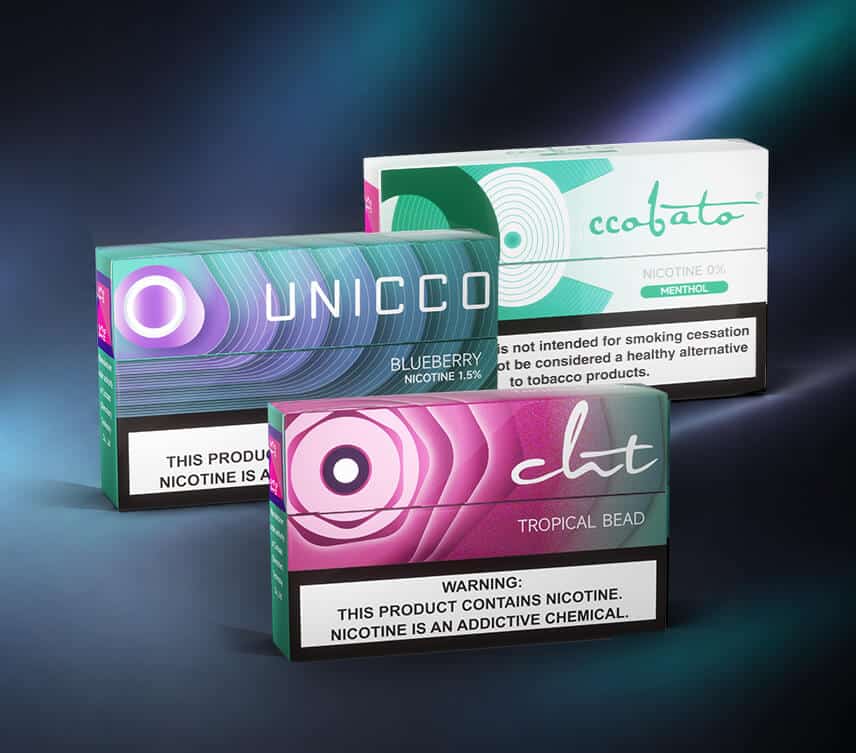
Capacity first, because that is where factories bluff. At our company, Ccobato HNB lists 500,000–600,000 cartons per month of semi-finished products for electromagnetic heating device. Semi-finished means the stick leaves the plant unbranded, which is why the entry order stays low and the buyer’s label goes on the pack, not ours.
Below that capacity, at our company, sits the raw-material line: cast-leaf HNB sheets, tobacco extracts, cut stems, susceptor materials, compatible heating devices. The batch section traced cargo drift to raw material changes first; making sheets and extracts in-house holds that first drift source, leaving process changes as the remaining drift cause.
The product matrix, at our company, splits by ingredient because the ingredient decides the regulatory path. Tobacco-based, nicotine herbal, and zero-nicotine lines fall under three rulebooks, all of which contain mainstream HNB product alternatives compatible with electromagnetic heating devices.
At our company: sales across 42 countries, zero patent disputes, shelf placement in mainstream retail such as LIDL and LAWSON. Records, not adjectives. Verify them with distribution paperwork and a patent and court search in your own jurisdiction.
The cooperation menu, at our company: OEM/ODM, white label with a flavor library, stability testing, and a customization process, co-packing, technology licensing, joint factory setup; the stated pitch: an OEM partner of one of the world’s top six tobacco groups.
Now send this guide’s RFQ fields and document demands to every supplier on your shortlist, us included. A manufacturer that welcomes the test clears it faster than one that objects.
References
[1] How to Spot Illicit TEREA Sticks | IQOS UK. https://www.iqos.com/gb/en/blog/guide-spot-prevent-illicit-terea-sticks.html
[2] Tobacco Heating System (THS) | Heat-not-Burn — PMI Science. https://www.pmiscience.com/en/products/heated-tobacco/tobacco-heating-system/
[3] US20170086508A1 – Aerosol-generating article with internal susceptor. https://patents.google.com/patent/US20170086508A1/en
[4] Terea Smartcore Sticks explained | PMI – Philip Morris International. https://www.pmi.com/glossary-section/glossary/terea-smartcore-sticks
[5] Smartcore Induction System FAQs | IQOS. https://www.iqos.com/aw/en/get-support/faqs/smartcore-induction-system.html
[6] Manufacturing the Tobacco Sticks | PMI Science (Scientific Update). https://www.pmiscience.com/en/news-events/scientific-update-magazine/manufacturing-the-tobacco-sticks-/
[7] EP4371373B1 – An Inductive Heating Arrangement And A Method For Controlling A Temperature Of An Inductive Heating Arrangement (Philip Morris Products SA). https://slateip.greyb.com/app/patent/EP4371373B1
[8] Which countries ban the sale of heated tobacco products? | Global State of Tobacco Harm Reduction. https://gsthr.org/faq-smoking-and-nicotine/heated-tobacco-products/which-countries-ban-the-sale-of-heated-tobacco-products/
[9] The EU’s Tobacco Products Directive | Keller and Heckman. https://www.khlaw.com/insights/eus-tobacco-products-directive-revisiting-requirements-and-updates-heated-tobacco-products
[10] CJEU strikes a blow to tobacco companies: heated tobacco subject to the same bans as cigarettes. https://theimpactlawyers.com/news/cjeu-strikes-a-blow-to-tobacco-companies-heated-tobacco-subject-to-the-same-bans-as-cigarettes
[11] Highlights of PMI’s 2025 Q4 and full-year results. https://www.pmi.com/investor-relations/press-releases-and-events/2025-q4-and-full-year-results
[12] Heated Tobacco Products: evidence and insights from our research | University of Bath. https://www.bath.ac.uk/corporate-information/heated-tobacco-products-evidence-and-insights-from-our-research-text-descriptions/
[13] Sina Finance Research Report – New Tobacco Tracking: Philip Morris International Releases 2024 Financial Report; Smoke-Free Product Market Continues to Rise. https://stock.finance.sina.com.cn/stock/go.php/vReport_Show/kind/search/rptid/792435218049/index.phtml
[14] 2FIRSTS – JTI Makes Third Bet on South Korea as Ploom AURA Enters a Market Dominated by lil and IQOS. http://dev.2firsts.com/news/jti-makes-third-bet-on-south-korea-as-ploom-aura-enters-a-market-dominated-by-lil-and-iqos
[15] 2FIRSTS – Global NGP Patent Battlefront: YTI Challenges PMI Over the “Gathered Sheet” Patent. https://www.2firsts.com/news/2firsts-special-report-global-ngp-patent-battlefront-yti-challenges-pmi-over-the-gathered-sheet-patent
[16] Philip Morris and BAT end global patent clash over heat-not-burn cigarettes | JUVE Patent. https://www.juve-patent.com/cases/philip-morris-and-bat-end-global-patent-clash-over-heat-not-burn-cigarettes/
[17] PMI and BAT Announce Global Patent Settlement | Philip Morris International. https://www.pmi.com/media-center/press-releases/press-details?newsId=27101
[18] Regulations for the Implementation of the Tobacco Monopoly Law of the People’s Republic of China (Revised in 2023) – Leiyang Municipal People’s Government Website. https://www.leiyang.gov.cn/xxgk/bmxxgkml/qt/sycj/fgwj/20260506/i3897430.html
[19] PMI Sustainability – Sustain product reliability. https://www.pmi.com/sustainability/fundamentals/sustain-product-reliability
[20] E-cigarette EU CE Certification Testing – JJR Lab. https://www.jjrlab.com/news/e-cigarette-eu-ce-certification-testing.html
[21] Eastar SCM – How to Run a Valid Factory Production Capacity Audit Before Bulk China Orders. https://www.eastarscm.com/risk-cost-management/factory-production-capacity-audit-bulk-china-orders/
[22] QINCheck – Trading Company vs Factory in China: How to Tell the Difference. https://qincheck.com/blog/trading-company-vs-factory-china
[23] Acceptable Quality Limit, AQL | QIMA. https://www.qima.com/aql-acceptable-quality-limit
[24] Heated Tobacco Products: Insights into Composition and Toxicity. https://pmc.ncbi.nlm.nih.gov/articles/PMC10459283/
[25] CN110244664A – Method of tobacco preparation system and running equipment for tobacco industry. https://patents.google.com/patent/CN110244664A/en
[26] The Influence of Ambient Relative Humidity on Key Indicators of Heated Cigarettes Made from Dry Reconstituted Tobacco Leaves (Tobacco Science and Technology, 2022, Vol. 2). https://d.wanfangdata.com.cn/periodical/yckj202202012
[27] China Sourcing Agents – How Our China Sourcing Process Works: From RFQ to Delivery. https://china-sourcing-agents.com/how-it-works/