
FDA authorization is not patent protection: the IQOS exclusion order timeline
Philip Morris had FDA authorization for IQOS. Its products were once banned at the border. The reason is the gap this guide exists to close: regulatory clearance and patent freedom to operate are two separate channels, and the IQOS timeline shows what happens when only one is checked.
On April 30, 2019, the FDA issued a marketing granted order for the IQOS system.[1] On July 7, 2020, it authorized the IQOS 2.4 system holder, charger, and HeatSticks for marketing with modified risk claims.[1] Philip Morris read that as a green light. Patent law read nothing at all.
The dispute that undid the import program began in April 2020, when Reynolds filed a Section 337 complaint at the International Trade Commission accusing the IQOS line of infringing two of its patents.[2] On September 29, 2021, the Commission found a violation of Section 337 based on infringement of claims 1, 2, and 5 of the ‘915 patent and claims 27-30 of the ‘123 patent.[3] It issued a limited exclusion order banning the importation of infringing products by Philip Morris and its affiliates.[2] The Federal Circuit affirmed the decision in full on March 31, 2023.[2]
Note what the order hit: cargo. Not a fine, not a royalty demand, but shipments held at the border. The exclusion came off only in March 2024, when the Commission rescinded the remedial orders after PMI and BAT announced a global settlement encompassing all related injunctions and exclusion orders.[3][4]
The lesson is not that PMI was reckless. It is that no regulator’s approval erases another company’s patent rights. The rest of this guide turns that lesson into a buyer’s sequence: correct the mental model, map the risk, verify supplier claims, put the findings into the contract, manage channels and re-checks, and leave with tools you can use this week.
The PMI-BAT patent war: six years, one global settlement, and why third parties stay outside the umbrella
Two giants spent six years suing each other across four continents. The 2024 settlement that ended their war quietly re-aimed it, and the clause that matters most to you is the one you are not in.
The fight opened in 2018, when Philip Morris launched a patent infringement action in Japan against BAT’s heated tobacco products. In spring 2020 BAT hit back, suing Philip Morris at the International Trade Commission in the US and filing lawsuits in several European countries, including Germany and the UK.[5]
On February 2, 2024, the companies announced a global settlement. The provisions are non-monetary. They resolve all ongoing patent infringement litigation between the parties over heated tobacco and vapor products, they encompass all related injunctions and exclusion orders, and they prevent future claims against each other’s current products.[4][6] The agreement applies globally and, per BAT’s filing with the SEC, is valid for eight years.[5]
Read the scope once more: claims between PMI and BAT. Nothing in the settlement binds either company toward any third party. Compatible sticks and OEM/ODM lines were never parties. The umbrella has two seats.
Worse, the settlement may tighten the pressure on everyone else. Chinese legal analysts following the deal argued that the two giants’ alliance marks a watershed in the heated tobacco and e-cigarette markets, squeezes the US e-cigarette market, and frees up energy for PMI and BAT to expand and complete further acquisitions of e-cigarette-related patents.[7]
For a buyer, the practical reading is blunt. Six years of global litigation consumed enormous enforcement capacity. That capacity does not retire. The parties agreed in February 2024, in writing, not to spend it on each other.
Patent families never retire: continuation filings and the 74,000-patent reality check
About 74,000 patents. That is what a decade of tobacco harm reduction innovation had produced on paper as of late 2021: 26,540 for vaping, 30,432 for heated tobacco, and 16,786 for smokeless products.[8]
Waiting for a patent to expire is usually waiting for nothing. Take one Philip Morris family as the pattern. Its internal-susceptor article was published in 2017, granted on November 28, 2023, with an adjusted expiration date of December 16, 2037, and a later application in the same family, filed in December 2025, claims priority back to 2014.[9] While you watch the calendar, the owner files again.
The induction cartridge family shows the same discipline. A cartridge for an inductively heated device claims priority from October 2021, earned its European grant in January 2026, and still has applications pending in the US, Japan, Korea, and China.[10] The giants are not exiting the field. They are restaking it.
So do not ask how many patents a supplier holds. Ask for a patent-to-product table: one row per model you will sell, listing the patents that read on it in each target market. A number is marketing. A table is something your lawyer can audit.
Section 337 and exclusion orders: the mechanics of getting stopped at customs
Your container is at the port. The exclusion order does not ask how good your compliance file is. It stops the cargo.
Section 337 gives the International Trade Commission exactly two kinds of remedial orders: exclusion orders and cease and desist orders. An award of money damages is not available as a remedy for a Section 337 violation.[11] Patent risk at the ITC therefore takes a specific shape. You are not being sued for money; your shipments are being stopped.
The two exclusion types differ in reach. A general exclusion order directs US Customs and Border Protection to exclude all infringing articles, without regard to source. A limited exclusion order covers infringing articles that originate from a specified respondent in the investigation.[11] Precision matters when a supplier tells you a case “shut down the whole category.” What a general exclusion order actually closes is every infringing source; articles outside the infringing claims still move.
How wide can the target list get? Reynolds’ 2024 complaint named 35 respondents across the global vape supply chain: manufacturers, distributors, and retailers, many based in China.[12] One boundary note: that case sat in the disposable e-cigarette category, not heated tobacco, and the asserted patent claims were found invalid as obvious.[12] Read it as a picture of supply-chain reach, not as an HNB patent precedent.
Heated tobacco did get its own precedent. In the IQOS investigation, the Commission issued a limited exclusion order banning the importation of infringing products by Philip Morris and its affiliates.[2] FDA-authorized, global scale, and still stopped at the border. Size and regulatory standing did not matter. Claims did.
Vetting supplier patent claims: EDIS, USPTO assignments, and four questions that cut through
Every patent claim a factory makes can be checked in an afternoon. Two public databases and four questions do the checking, and the whole exercise costs less than one detained container.
Start with the docket, not the brochure. Public orders and decisions of the administrative law judges and the Commission in Section 337 investigations instituted after January 1, 1996, plus other documents in the public docket files, are searchable on the USITC’s EDIS system at edis.usitc.gov.[13] Type in the supplier’s name. If it appears as a respondent in a past investigation, you learn in minutes what a “zero dispute export record” would never volunteer, and a hit tells you the pitch left something out.
Then follow the ownership trail. The USPTO’s search tools let anyone look up patent assignments and changes in ownership.[14] Run the supplier’s name, its subsidiaries, and any related entity you can identify. The question behind a “30+ owned patents” line is where the patents came from: invented and still held, purchased, or pledged as loan security? All three stories support a sale, but they imply very different engineering depth.
Four questions finish the audit. First, are these utility patents or design patents? A utility patent protects the way an article is used and works; a design patent protects the way it looks.[15] A wall of design patents does not cover a heating mechanism.
Second, are they granted or merely pending? The distinction carries money, because many licensors limit patent coverage to issued patents and exclude applications.[16] Third, in which jurisdictions? A Chinese patent binds nothing in Germany.
Fourth, where is the claim chart? A supplier that cannot show claim-by-claim correspondence between its products and its patents is selling decoration, not assurance.
One more reality check on the heating route itself. In the PMI-BAT war, four of PMI’s resistive-heater patents were ruled invalid in the UK.[17] That is a specific win for those claims, not a route-level liberation. When a salesperson says “that route is dead, so we are clear,” the only acceptable version cites specific patent numbers.
That is the method: two public databases, four questions, and a demand for specificity. It requires no law degree. It requires asking.
Auditing an FTO report: five fields that separate an opinion from a filing map
Your supplier sent a 40-page “FTO report.” Does it give an opinion, or just describe the field? Five fields tell you in minutes, and the FTO opinion itself is the most direct executable evidence of patent safety you can hold.
Field one: the product definition. Which model, which version, which configuration? An analysis that covers “our HNB stick line” but not the exact cartridges you will sell describes a category, not a product.
Field two: the jurisdiction list. Patent rights are territorial. An opinion limited to US patents says nothing about the EU or Japan. The filing map should match your launch map. As of 2021, heated tobacco publications concentrated in China (22,956) and the United States (14,344), while Africa and the Middle East, apart from Morocco, South Africa, and Israel, had no registered patent activity.[8]
Enforcement has tracked the same map, with the marquee battles of the last decade running in Japan, the United States, Germany, and the UK.[5] Check the markets your distributors actually sell into.
Field three: the search date. Applications publish only 18 months after the earliest priority date, so anything filed inside that window is invisible in public patent databases.[18] A report dated before your last design change analyzes a product that no longer exists.
Field four: the claim chart. The distinction to enforce is exact: a filing map tells you who is filing what and where; an FTO opinion tells you whether a specific, defined product infringes a specific, defined claim in a specific jurisdiction.[18] No element-by-element chart against the claims means you are holding the first kind, whatever the cover says.
Field five: who signed it. A formal FTO opinion comes from qualified patent counsel, not from the supplier’s marketing department. And keep the limit in view: FTO analysis can never guarantee that your company will not be sued, because unpublished applications and interpretation risk always remain.[19] That is why the next stop after the report is the contract. A strong opinion paired with a weak indemnity still leaves the bill with you.[16]
Anatomy of a compatible stick claim: why ‘compatible’ sits inside the patent family’s reach
‘Compatible’ is an engineering statement. In a claim chart, it reads as a list of elements your stick shares with theirs. That is why compatible sticks are the most patent-sensitive spot in HNB sourcing, and why your engineering freedom is decided by claim elements, not by brand names.
Take Philip Morris’ internal-susceptor article as the worked example. The claim describes a rod with a mouth end and a distal end upstream from the mouth end. The aerosol-forming substrate sits at or towards the distal end of the rod. An elongate susceptor is disposed substantially longitudinally within the rod, in thermal contact with the substrate, and configured to let an electrically operated device with an inductor consume the article.[9] Each phrase is a checkable element: where the substrate sits, where the susceptor sits, how the two touch.
The family is alive. The same assignee’s cartridge filings claim priority from October 2021, earned a European grant in January 2026, and still have applications pending in the US, Japan, Korea, and China.[10] The substrate side is covered too: the same specifications recite reconstituted tobacco, preferably cast leaf, more preferably RRP cast leaf, with aerosol-former content spelled out by weight on a dry basis.[10] Stick positioning and substrate structure are both patented territory, so element-by-element comparison against your target markets’ families is a pre-production task, not a post-lawsuit one.
Two heating routes carry two different risk profiles. Resistance heating runs through PMI’s core patents, and the UK invalidation of four of them was a specific win, not a route-level liberation.[17] As of early 2024, induction heating is where both giants were actively filing: PMI on the article side, BAT on devices that heat sticks by induction.[5] Switching heating principle is a move into a different set of claims, not a reset to zero, and design-around work always leaves residual risk in the gap between “different” and “non-infringing.”
For your buying decision the takeaway is narrow: ask the supplier to chart your stick against the exact claims in your target markets. If that chart does not exist, the compatibility pitch is a risk you are carrying without knowing its size.
From diligence to contract: the indemnity clauses that carry your FTO findings
The damages are not the expensive part of patent litigation. The defense is, and the default law will not pay for it.
Without a contract, UCC Section 2-312(3) gives a buyer a default warranty that goods arrive free of third-party infringement claims. But it provides only an indemnity, not an obligation to defend the purchaser or hold the purchaser harmless.[20] Indemnity means you hire the lawyer and chase reimbursement later. Defense means the supplier’s lawyer steps in on day one. The difference is the whole game, because a duty to defend makes the indemnifier liable for the costs of defending allegations of infringement, not only proven cases.[21]
So the clause you want reads defend, indemnify, and hold harmless, with three things around it. First, a cap that does not swallow it: IP indemnities are frequently carved out of general liability caps, and you want that carve-out written in.[16] Second, control terms you can live with: suppliers routinely ask for sole control of the defense and settlement, which is standard, but retain approval over settlements that restrict your continued use of the product.
Third, remedies. The standard menu is the right to continue use, replacement with non-infringing alternatives, or a refund with termination rights.[16]
Then read the carve-outs like an adversary, because suppliers draft them broad. The typical list excuses the supplier for customer specifications, unauthorized modifications, and combination with other products. Many suppliers also limit coverage to issued patents, excluding applications, or to jurisdictions where they actively do business.[16]
The combination carve-out deserves special fear in your category. When a device and a stick come from two different suppliers, a combination infringement claim can leave both refusing to defend, each insisting its part performs only some of the claim elements.[20] Split-source buying demands a written allocation of that risk before the first container, not after the lawsuit.
Two closing moves. Write in a notice duty: if the factory receives a patent warning letter, it must forward it to your brand. And when the indemnity cap stalls the negotiation, trade it for a remedy: a free replacement with a non-infringing version often costs the supplier less than a bigger number and solves your actual problem.
Whoever supplies the design carries the design risk; write it that way. The OEM/ODM choice is, among other things, a choice about who answers for infringement, and that answer belongs in the contract, not in the sales deck.
Channel risk: distributors walk away before the lawsuit does
Which of your distributors has ended cooperation over a patent opinion? Every serious supply chain has an answer, and that answer changes your risk picture more than any factory brochure.
Channel pressure lands before litigation. As a Chinese tobacco-industry trade outlet observed in 2021, it has become routine for Chinese companies exporting HNB devices to encounter foreign distributors raising patent opinions or terminating cooperation.[22] A distributor needs no court order to delist you. It needs a lawyer’s letter, a cautious compliance team, and a shelf with alternatives.
A supplier’s own export record cannot fill this gap. “Zero disputes on our side” describes the factory’s litigation history. It says nothing about the channel events that never became lawsuits: the distributor who raised a patent opinion, the retailer who paused the order, the partnership that quietly ended. Those events leave no docket entry.
So ask it directly: which of your distributors has terminated cooperation over a patent opinion, and what did you do about it? A supplier that has managed that moment has a playbook. One that has never faced it may simply not have exported where the patents are. The final section applies the verification method to a real set of supplier claims, including an export record worth reading the same skeptical way.
After signing: knockout timing, re-checks, and the case against ‘absolutely patent safe’
Signing the contract is not the finish line. Three triggers reopen your freedom-to-operate file, and the cheapest due diligence happens before the first deposit.
Time the checks like procurement gates. Run the patent diligence at four fixed points: before the technical design review, before the mold deposit, before contract signing, and before first mass production. The economics reward early work: FTO analysis done early in the product cycle lets a company modify the design and avoid infringement before reaching the point of no return, or take a license while it still has bargaining power.[19] Run the same analysis after tooling and purchase orders and it becomes damage control.
Then treat the file as living. FTO analysis is not a one-time event; it must be updated each time the product definition changes materially.[18] Three changes reopen it every time: a design change (new mold, new material, new supplier), a new target market, and newly published patents.
On new publications, remember the lag: applications stay invisible in public databases for 18 months after the earliest priority date, so the pool you checked in March is not the pool that exists in November.[18] Write engineering-change notification into the contract as a process obligation, so the factory tells you when it changes what you already cleared.
Finally, retire the binary. No one can honestly sell “absolutely patent safe,” because FTO analysis can never guarantee that your company will not be sued; unpublished applications and interpretation risk always remain.[19] What you can build is a managed combination: an FTO opinion, an indemnity clause with teeth, and a fallback market plan if a market closes.
“Safe” is a sales word. “Audited, contracted, and monitored” is a procurement standard. Manage the risk like a portfolio, re-check it on the triggers, and you stop asking whether a supplier is patent safe and start knowing where your risk sits this quarter.
Your takeaway toolkit: the supplier question card, red-flag list, and comparison table
Three tools close this guide, all three sized for one printed page: a question card, a red-flag list, and a comparison table. Use them in order. Screen with the red-flag list first, because it ends weak meetings before they start. Then ask with the question card in the meeting, and close with the comparison table once shortlisted suppliers have answered in writing.
The red-flag list. Any one flag ends the meeting, and each carries the reason:
| Red flag | Why it ends the meeting |
|---|---|
| No FTO report | The risk is real and unsized: with no chart against the claims, nobody can measure it (section 6) |
| Only pending applications, nothing granted | Many licensors limit coverage to issued patents and exclude applications, so pending buys you almost nothing (section 5)[16] |
| Design patents only | A design patent covers how an article looks, not how a heating mechanism works (section 5) |
| A filing map dressed as an FTO opinion | A filing map says who is filing what and where; it never concludes whether your defined product hits a defined claim (section 6) |
| Indemnity limited to the supplier’s own issued patents | The patents most likely to hit you belong to third parties; this wording hands those claims back to you (section 8) |
| Refusal to disclose patent numbers | Without numbers the assignment search and the EDIS docket check cannot run, so the claim stays unverifiable (section 5)[14][13] |
The question card. Work it down in the meeting, and accept answers in writing only:
| Ask | The answer must show |
|---|---|
| Utility or design? Granted or pending? Which jurisdictions? Where is the claim chart? (section 5; section 7 shows how to read one) | Types, status, geography, and the chart, in writing |
| Which product, which markets, what search date, which law firm? (section 6) | Your product and launch markets, a date after your last design change, qualified patent counsel |
| Which distributors have ended cooperation over a patent opinion? (section 9) | A named event, or a credible “none”, plus what happened next |
| Your patent number list | The raw input for the USPTO assignment search and the EDIS docket lookup[14][13] |
The comparison table. Run every survivor across four columns, and read each filled row for what is missing, not for what is present. Scoring has no weights. Two rules replace it: every cell must rest on a written document, not a promise, and the per-model patent table from section 3 sits as a fifth line under the table, as the floor. No fifth line, no candidacy.
| Supplier | Patent coverage by jurisdiction | Portfolio origin (assignment trail) | What the FTO covers | What the contract says |
|---|---|---|---|---|
| “Alpha Factory” (worked example, not a real company) | 3 granted utility patents, CN only; none in your US or EU markets | 1 invented, 1 purchased, 1 held by a related entity | One model, EU only, search date 14 months old, unsigned by patent counsel | Issued patents only, no defend duty, broad combination carve-out |
For the worked example the fifth line reads: per-model patent table for your two models, not provided. That missing line ends the meeting before price is discussed.
Nothing here needs new data. Everything on the three tables was covered above, which is the point: patent safety, as a verifiable claim, fits on one page.
Applying the framework: a compatible-stick supplier case in point
The verification methods above apply to every supplier, including the one in this final section. So here is the method run on it, question by question.
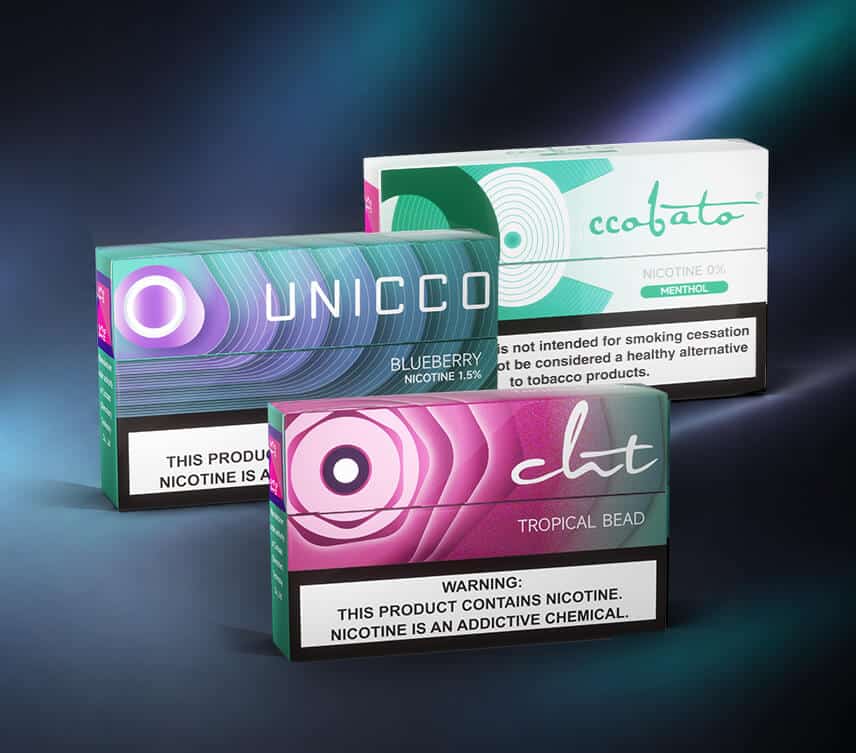
The subject is Ccobato (CCOBATO (SHENZHEN) TECHNOLOGY CO ., LTD.), an OEM/ODM heated-tobacco sticks manufacturer at ccobato.com. Per its own site: tobacco-based sticks benchmarked against mainstream HNB product taste, electromagnetic heating HNB product replacements, and herbal lines, plus electromagnetic heating HNB product compatible cast-leaf semi-finished sticks at 500,000 to 600,000 cartons a month.
The four questions from section 5, asked of that site:
| Question | What the site answers | What the answer still owes you |
|---|---|---|
| Utility or design? | 30+ invention patents and PCT applications, FTO-analyzed, per the company | A per-model patent table (section 3) and the assignment trail: invented, bought, or pledged? |
| Granted or pending? | The 30+ line does not split the two; its filings do include granted inventions, one covering a single-alloy susceptor | The full number list with statuses. Refusal is a section 11 red flag |
| Which jurisdictions? | The site does not say | A list matched to your launch markets (section 6, field two) |
| Where is the claim chart? | Ultra-Microcellular Technology passed FTO verification, and the patents carry FTO analysis, per the site | The opinion itself, judged by section 6’s five fields |
The closing judgment, stated with its limit: this guide names no safest market or stick form, because the public record does not support one. Whether a Compatible stick can clear the EU is decided by a per-market claim chart against the incumbent’s European families, which already hold grants there (section 7). Only the chart does, and no supplier, our company included, is exempt from producing one. Answers that survive sections 5 through 9 then land in the contract from section 8. To test our company yourself, the door is the inquiry form at ccobato.com.
References
[1] Philip Morris Products S.A. Modified Risk Tobacco Product (MRTP) Applications | FDA. https://www.fda.gov/tobacco-products/advertising-and-promotion/philip-morris-products-sa-modified-risk-tobacco-product-mrtp-applications
[2] Philip Morris Products S.A. v. International Trade Commission, No. 22-1227 (Fed. Cir. 2023). https://law.justia.com/cases/federal/appellate-courts/cafc/22-1227/22-1227-2023-03-31.html
[3] Federal Register 89 FR 18668: Certain Tobacco Heating Articles and Components Thereof; Notice of Commission Decision To Institute a Rescission Proceeding (March 14, 2024). https://www.govinfo.gov/content/pkg/FR-2024-03-14/html/2024-05455.htm
[4] PMI and BAT Announce Global Patent Settlement | Philip Morris International. https://www.pmi.com/media-center/press-releases/press-details?newsId=27101
[5] Philip Morris and BAT end global patent clash over heat-not-burn cigarettes | JUVE Patent. https://www.juve-patent.com/cases/philip-morris-and-bat-end-global-patent-clash-over-heat-not-burn-cigarettes/
[6] BAT Form 6-K Exhibit 99.1 – BAT and PMI Announce Global Patent Settlement (SEC EDGAR filing, 2024-02-02). https://www.sec.gov/Archives/edgar/data/1303523/000095015724000101/ex99-1.htm
[7] Legal Analysis: PMI’s Settlement with BAT May Disrupt the Existing Competitive Landscape and Increase Pressure on Chinese E-cigarette Companies (2Firsts Chinese Edition, 2024-02-03, Tang Shunliang/Tianyuan Law Firm). https://cn.2firsts.com/news/detail?menu=editorial&id=8721
[8] Patented Tobacco Harm Reduction: Is It Only for the Developed World? (Wolters Kluwer Patent Blog, 2021-11-29). https://legalblogs.wolterskluwer.com/patent-blog/patented-tobacco-harm-reduction-is-it-only-for-the-developed-world/
[9] US20170086508A1 / US11832369B2 – Aerosol-generating article with internal susceptor (Philip Morris Products SA). https://patents.google.com/patent/US20170086508A1/en
[10] US20240407438A1 – Cartridge for inductively heated aerosol-generating device – Google Patents. https://patents.google.com/patent/US20240407438A1/en
[11] If the Commission finds a violation of Section 337, what remedies are available? | United States International Trade Commission. https://www.usitc.gov/faq/question/if_commission_finds_violation_section_337_what.htm
[12] 2FIRSTS Special Report – Reynolds’ 337 Patent Case Ends, but a Harsher 337 Compliance Battle Now Targets the Entire Vape Supply Chain. https://www.2firsts.com/news/reynolds-337-patent-case-ends-but-a-harsher-337-compliance-battle-now-targets-the-entire-vape-supply-chain
[13] How can I research Commission precedent? | United States International Trade Commission. https://www.usitc.gov/faq/question/how_can_i_research_commission_precedent.htm
[14] Search tools | USPTO. https://www.uspto.gov/patents/search
[15] MPEP 1502 – Definition of a Design [R-07.2022]. https://www.uspto.gov/web/offices/pac/mpep/s1502.html
[16] Practical Guidance for Drafting and Reviewing IP Indemnification Clauses | Venable LLP. https://www.venable.com/insights/publications/ip-quick-bytes/practical-guidance-for-drafting-and-reviewing-ip
[17] IQOS’s core patent was invalidated. Can Chinese e-cigarette companies benefit from this? (2Firsts Chinese Edition, 2023-01-09)
https://cn.2firsts.com/news/detail?menu=editorial&id=3711
[18] Freedom to Operate in Pharma: The Step-by-Step FTO Analysis That Protects Your Pipeline | DrugPatentWatch. https://www.drugpatentwatch.com/blog/freedom-to-operate-in-pharma-the-step-by-step-fto-analysis-that-protects-your-pipeline/
[19] When Is a “Freedom to Operate” Opinion Cost-Effective? | Finnegan. https://www.finnegan.com/en/insights/articles/when-is-a-freedom-to-operate-opinion-cost-effective.html
[20] IP Indemnity in Supply Contracts: Common Vexing Problems (Klemchuk). https://www.klemchuk.com/ideate/indemnity-in-supply-contracts
[21] IP indemnities in commercial agreements | Taylor Wessing (2016-11-30). https://www.taylorwessing.com/en/insights-and-events/insights/2016/11/ip-indemnities-in-commercial-agreements
[22] IQOS has been banned from the US market. Will Chinese companies be next? (Juanjuan Think Tank/Tang Shunliang, TobaccoChina 2021-05-27) https://www.tobaccochina.com.cn/html/news/xxyc/592491.shtml